Zambia sets no age limit on used cars imported from Japan. The Zambia Revenue Authority's Customs Tariff Book, read on 19 November 2026, sets duty by a car's age but no cut-off, and Carbarn's Zambia import rules page says plainly: "There is no age limit." Age changes what you pay at the border, not whether the car may enter, and this guide shows how to judge whether a very old car is a sensible buy or a false economy.
Quick Answer
- Zambia sets no age limit on used cars imported from Japan. Right-hand drive only.
- Age can still affect your duty bill. Duty depends on engine capacity and vehicle age, so check the current position on the import rules page.
- Customs duty, registration and port clearance are paid by you, on top of the listed price.
- A very old, cheap car can cost more than you planned once duty, registration and clearance are added.
- Condition, parts and resale matter more than the legal line.
Is there an age limit on car imports in Zambia?
No. Zambia does not set an age limit on used cars imported from Japan. The Zambia import rules and regulations page states it plainly: "There is no age limit." Its other rules are about the car type and steering position: only right-hand drive passenger cars are accepted. A 2010, 2005 or even late-1990s car can legally clear customs if its paperwork is in order.
Not every neighbour is the same. Zimbabwe caps used-car imports at ten years, according to Legalbrief reporting in July 2024, though that notice relaxed the ban for inherited cars, returning citizens and diplomats. For a Zambian buyer, the difference is real. You can consider older, cheaper Japanese stock that many buyers across that border cannot.
Legal and sensible aren't the same thing, though. "No age limit" means the border won't stop you. It doesn't mean a sixteen-year-old car is a good buy, and the rest of this guide deals with that gap.
Only right-hand drive (RHD) cars are accepted, and the Zambia Revenue Authority (ZRA) collects customs duty at clearance.
If you're new to the whole process, the guide to importing a car to Zambia from Japan walks through ports, documents and timing. This article stays on the age question.
Does a car's age change what you pay at clearance?
It can, but it doesn't decide whether the car is allowed in. The import rules and regulations page lists a flat duty that varies by the age of the car, plus a carbon surtax that varies by engine size. Age works as a cost input, not a ban. A six-year-old car is as legal as a two-year-old one.
Rates and age bands change with budget cycles, so check the current position on that page, or with ZRA or your clearing agent, before you commit to a car. The ZRA Customs and Excise Tariff also lists a surtax on vehicles older than five years, so confirm the current amount with ZRA or your clearing agent too.
Duty is also only one charge among several. It sits alongside registration and port clearance. Don't add one number to the car's price and call the result your landed cost. Landed cost means the full amount to get the car registered and in use in Zambia, and only your final clearance paperwork tells you that.
One grey area remains. Public sources don't make clear whether age is counted from the manufacture date or from first registration in Japan. For a car close to an age band, ask ZRA or your clearing agent before you buy.
How do age and engine size shape the duty bill?
Two inputs drive your duty: the engine capacity in cubic centimetres (cc) and the age of the car. The import rules page lists a flat duty that varies by car age and a carbon surtax that varies by engine size. A smaller engine generally means a lower duty bill, which is why cc is printed on every listing.
Age and engine size can pull in different directions. Carbarn's rules page lists a lower flat duty for cars over 5 years old, while engines over 1,500 cc carry a higher carbon surtax.
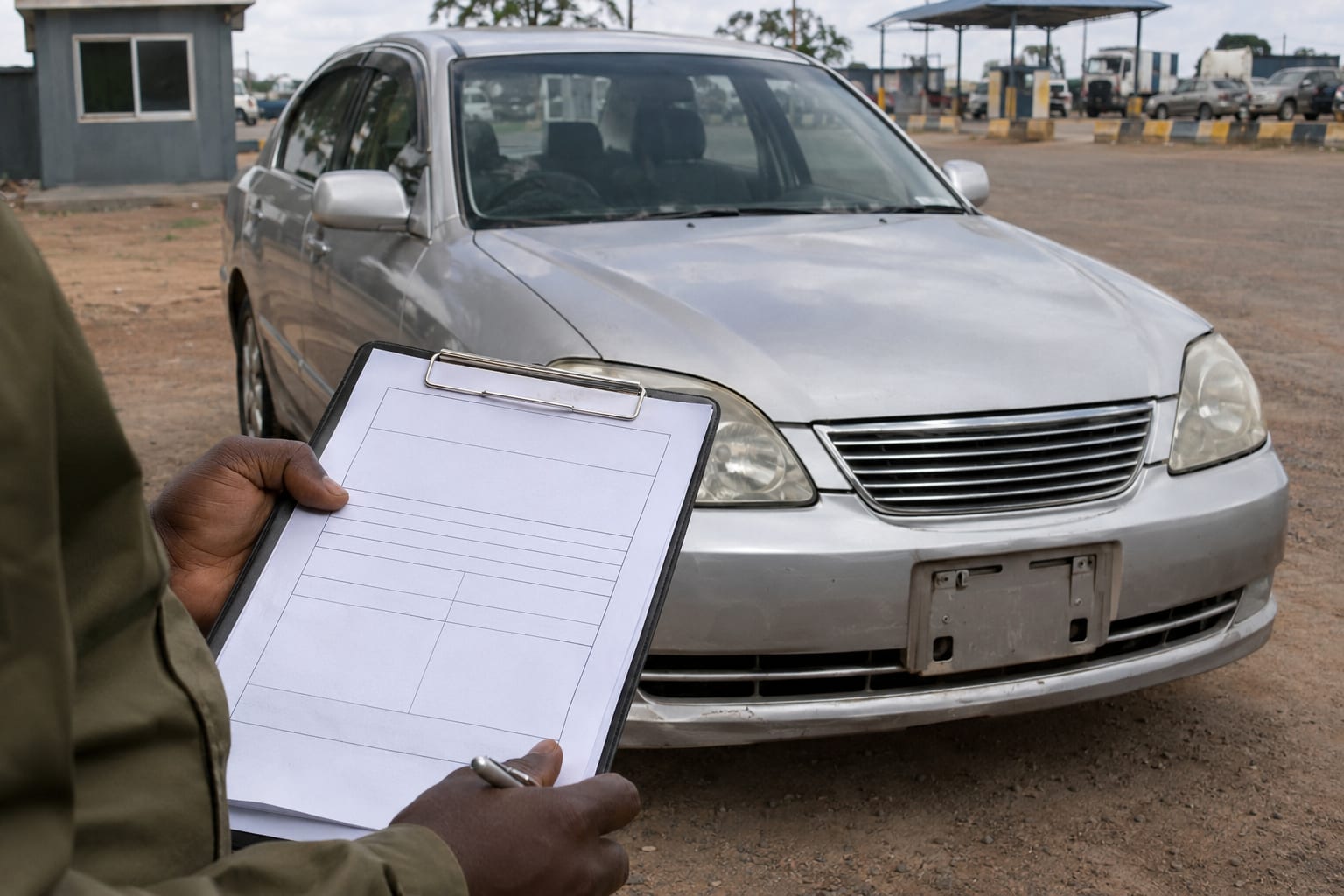 Illustration: Duty is assessed at clearance from the car's engine size, age and Yellow Book value.
Engine size deserves a second look for Lusaka driving. A 1,500 cc hybrid hatch and a 2,800 cc diesel 4WD can carry similar purchase prices in Japan, yet they land in different duty brackets and very different fuel bills. If most of your driving is Lusaka traffic with the odd run to Ndola or Livingstone, the smaller engine usually makes more sense on both counts.
The other thing to understand is what an exporter's all-inclusive price actually covers. The table below sets it out.
| In an all-inclusive Japan export price |
Paid separately by you in Zambia |
| The vehicle itself |
Customs duty, which depends on engine size and age |
| RoRo ocean shipping to Dar es Salaam |
Port clearance charges |
| JEVIC pre-shipment inspection, the auction sheet and the exporter inspection report |
RTSA registration in Zambia |
JEVIC is the Japan Export Vehicle Inspection Center. Its certificate is a mandatory condition appraisal issued before the car leaves Japan. It's a quality gate, not a tax, and it doesn't replace anything ZRA does at the border.
For the current duty framework, start with the import rules and regulations page. For what happens after clearance, the guide to the RTSA registration fee for an imported car covers the registration side.
Method and sources. The age rule is from the Zambia Revenue Authority's Customs Tariff Book, read on 19 November 2026, and from Carbarn's Zambia import rules page, read on 21 November 2026, which also gives the flat duty by age band and the carbon surtax by engine size. This post gives no rates, because they change with budget cycles.
How old is too old for an imported car?
The law sets no ceiling, so the real limits are condition, parts and resale. A well-kept twelve-year-old Toyota with a clean auction sheet can serve a Lusaka family for years. A rare fifteen-year-old model with thin parts support can become a driveway ornament. The age on the paperwork matters less than what the reports and the market tell you.
What to check on any car over 10 years old
Start with the auction sheet and the auction grade. The auction sheet is the inspection report written at the Japanese auction house, and the grade is its one-number summary of overall condition. A grade 4 or above signals a tidy car. A grade 3.5 is still a good car but expect some marks. Read the notes, not just the number.
Then look where age does its damage. Check the underbody and sills for rust, because that's harder to fix than paint. Compare the odometer against the car's age and service history for anything that doesn't add up. A low reading on a very old car isn't always good news.
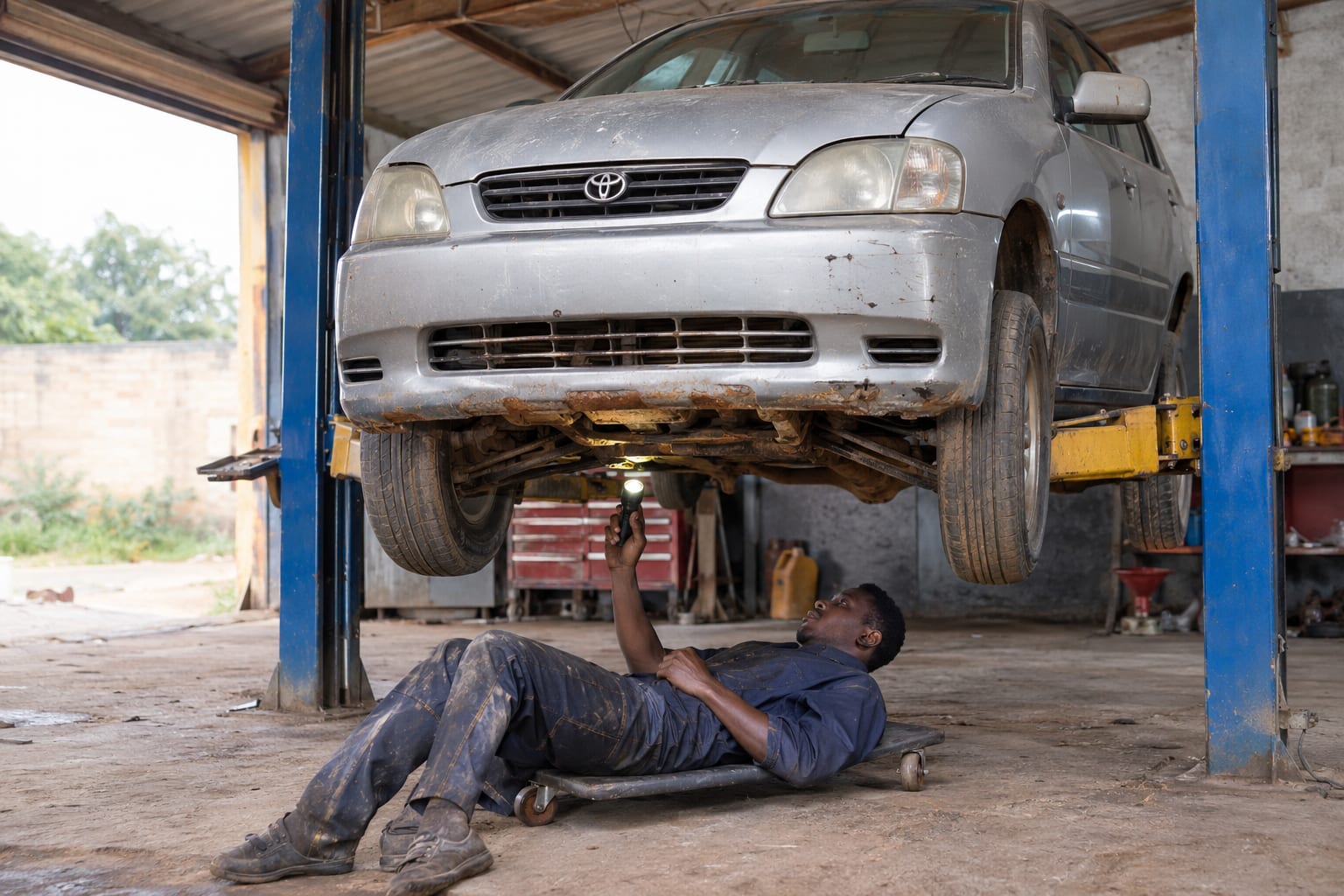 Illustration: On a car over ten years old, the underbody and sills tell you more than the paint does.
Finally, think about Zambia, not Japan. Ask a local mechanic whether parts for that exact model are easy to find in Lusaka. And think about resale: every extra year narrows the pool of buyers who will want the car after you.
Where very old cars are poor value
Rare, thirsty or hard-to-service old models are where "no age limit" trips people up. An old large-engined diesel 4WD may look cheap in Japan, but it brings high fuel costs, a different duty bracket from a small hatch and slower parts. A mainstream petrol or hybrid hatch of the same age avoids most of that.
The cheaper and odder the car looks on a Japan listing, the more likely its real cost shows up after it lands. If a model is scarce on Zambian roads, there's usually a reason.
Where older cars still make sense
Mainstream, easy-to-service small hatches and hybrids are the sweet spot for an older import. Models such as the Honda Fit and Toyota Prius are available as hybrids that are sensible on fuel, and worth checking for local parts support before you buy. For general budgeting advice, the reliable used cars in Zambia price guide is a good companion read.
How does Carbarn handle older cars?
Carbarn lists older cars the same way it lists newer ones. Carbarn owns every car it lists, so there's no broker in the middle and no third-party cancellation. You see two reports before you pay: the official Japanese auction sheet and Carbarn's own in-house inspection with photos and defect notes. The condition of a 2012 car is as visible as that of a 2021 car.
The listed price covers the vehicle, RoRo shipping to Dar es Salaam (Durban is the alternative) and the JEVIC inspection. Customs duty, registration and port clearance are yours to pay in Zambia. Allow about 6 to 10 weeks from purchase confirmation, with the car travelling overland from the port.
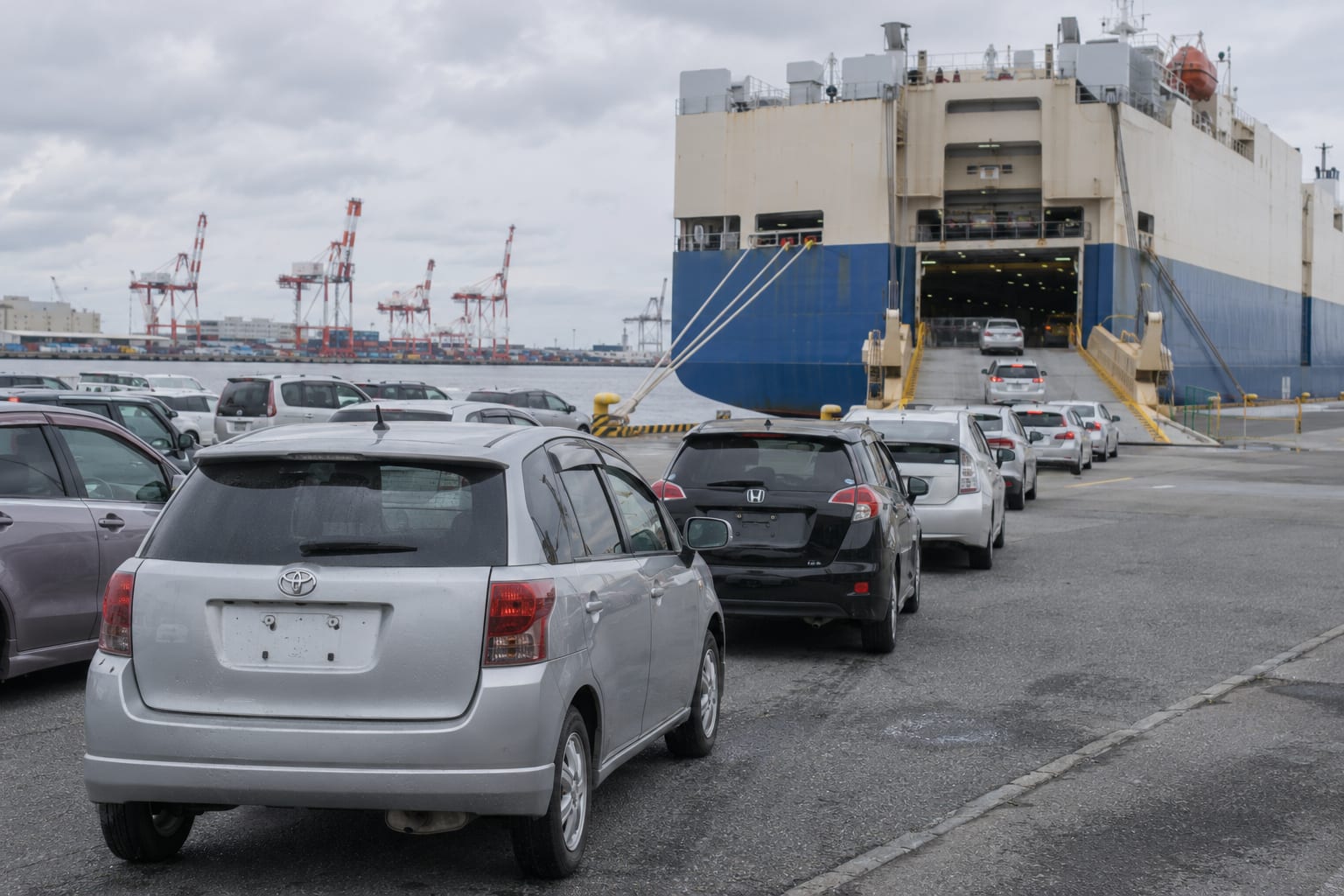 Illustration: Cars travel by RoRo ship to Dar es Salaam, then overland into Zambia.
Payment is full and upfront, by bank transfer or card against the proforma invoice. Your dashboard holds the invoice, inspection sheets, bill of lading and vessel tracking.
The full stock spans many model years, which shows the no-age-limit rule in practice. The how to buy guide covers the steps, and the article on how to import used cars from Japan to Zambia covers the paperwork.
Who does an older import suit, and who should skip it?
An older import suits a budget buyer who reads the reports, picks a mainstream model and keeps money back for duty and registration. If you're comfortable ordering from Japan, waiting about 6 to 10 weeks, and arranging clearance with a local agent, the saving over a Lusaka lot can be worth it.
Skip it if you need a car this week. Skip it too if the car that caught your eye is rare, thirsty or hard to service here. The purchase price is the smallest part of that mistake.
If you'd rather compare against what's already on local lots, the guide to finding used-car deals in Zambia sets out the trade-offs. Our verdict: an older import is probably the right fit for a patient buyer with a mainstream hybrid or small hatch in mind, a clean auction sheet in hand, and the duty bill already budgeted.