


Finding used cars for sale in Zambia is easy. Finding one that stays affordable after purchase is harder.
Two cars can carry similar adverts, yet differ sharply in condition, history, parts support and running cost. One may have clear documents and a sensible service record. The other may need repairs or create problems during registration.
The best price is therefore not always the lowest advert. It is the balance between purchase cost, condition, documentation, fuel use, servicing, import charges and resale demand. You can buy a vehicle already in Zambia, or source a right-hand-drive vehicle from Japan. This guide explains how to compare both routes before you pay.
Quick Answer
- Compare the full buying cost, not only the advertised vehicle price.
- Check condition, chassis details, ownership records and inspection evidence before payment.
- A common vehicle with accessible parts can offer better value than a newer, unfamiliar model.
- Japan-sourced vehicles may offer wider choice and pre-shipment records, but delivery can take about 6 to 10 weeks from purchase confirmation.
- Customs, registration and port-clearance charges must be checked separately.
Finding Used Cars for Sale in Zambia
In 2026, UsedCars.co.zm identifies two main sources for used cars in Zambia: Japanese dealers and car owners in Zambia (UsedCars.co.zm, “Cars for Sale in Zambia”, 2026). Local dealers, private sellers, marketplaces and Japanese exporters each offer different trade-offs in speed, choice, inspection access and documentation.
 Compare the seller, the vehicle and the documents before paying.
Local dealers in Lusaka and other towns may let you view a vehicle before paying. That can make a physical inspection easier. However, you still need to confirm ownership, registration status, chassis details and the seller’s authority to complete the sale.
Private sellers can sometimes offer a lower asking price. The risk is that documents, service history or accident information may be incomplete. Never treat a clean-looking vehicle or a confident seller as proof of good condition.
Online marketplaces are useful for comparing body styles, prices, locations and vehicle ages. AutoTrader Zambia, for example, provides search filters for cities, makes, models, prices, mileage, fuel type and engine size (AutoTrader Zambia, “Cars for Sale in Zambia”, 2026). A marketplace listing is still only a starting point. Photos and descriptions do not replace an inspection.
Japan-based exporters provide another route. You may gain access to more Japanese-market vehicles and pre-shipment records. You also need to understand shipping, customs, registration and inland delivery before committing.
What Should You Compare Between Sellers?
Compare at least six areas:
- Seller identity and business details.
- Proof of ownership.
- Vehicle inspection evidence.
- Delivery timing.
- Included and excluded costs.
- Responsibility for registration and clearance.
Do not transfer money simply because someone has sent photos through WhatsApp. Match the seller’s name, invoice, vehicle details and payment instructions. If the documents do not agree, pause the transaction.
For locally sourced vehicles, ask to see the original registration documentation and proof of ownership. For Japan-sourced vehicles, request the auction sheet, inspection report, invoice and shipping details before payment.
How Much Should You Budget for a Used Car in Zambia?
In 2026, ZRA’s importation guidance separates the vehicle’s CIF value from other import-related charges. As a practical budgeting checklist, consider at least six cost lines: the vehicle, freight, inspection, customs, registration and clearance (Zambia Revenue Authority, “ZRA official website”, 2026). Set the full budget before choosing a model, and confirm which items are already included in CIF.
Use broad advert-price checkpoints rather than treating one advert as a market average:
- Under K150,000: older compact cars and greater age or condition trade-offs.
- K150,000 to K250,000: common compact cars, small family vehicles and some hybrids.
- K250,000 to K400,000: newer compact cars, larger family vehicles and some SUVs.
- Around K400,000 and above: larger SUVs, newer hybrids and specialist vehicles.
These are rough planning checkpoints, not verified nationwide price averages or full landed-cost budgets. A listing may be duty-not-paid or exclude customs, registration, clearance, inland delivery and immediate repairs. Confirm those items before treating a band as your complete budget. Prices also move with exchange rates, auction results, model year, odometer readings and condition.
Which Costs Belong in the Full Budget?
Separate the following before comparing two vehicles:
| Cost area | What to ask |
|---|---|
| Vehicle | What exactly is included in the advertised price? |
| Shipping | Does the quote cover transport to the port or beyond? |
| Inspection | Is pre-shipment certification included? |
| Customs | Who calculates and pays the applicable customs charges? |
| Registration | Are RTSA registration costs separate? |
| Port clearance | Who handles release and port-related charges? |
| Preparation | Will the vehicle need tyres, servicing or repairs after arrival? |
A price can look attractive because it covers only the vehicle. Another may include freight and inspection but exclude customs, registration and clearance. Comparing those figures directly will give you the wrong answer.
CIF means cost, insurance and freight up to the relevant port of entry. It is not automatically the same as the final amount needed to register and use the vehicle in Zambia. Ask for every component in writing.
The cheapest advertised car is often the most expensive comparison mistake. A lower entry price can be offset by higher engine-capacity exposure, difficult parts, weak fuel economy, missing documents or immediate repairs.
Never use phrases such as “duty included”, “tax-free” or “final landed price” unless the seller defines every charge clearly. If you see an estimated landed-cost figure, check whether it includes customs, registration and port-clearance charges.
What Makes a Used Car Reliable in Zambia?
In 2026, AutoTrader Zambia’s search page lets buyers screen vehicles using at least eight factors, including make, model, price, body type, age, mileage, fuel type and engine size (AutoTrader Zambia, “Cars for Sale in Zambia”, 2026). Those filters help you narrow the search, but reliability depends on condition and support as much as the badge.
A reliable used car should have clear evidence of its history. Look for consistent mileage, sensible wear, no unexplained damage and documents that match the vehicle. A high auction grade helps, but it does not remove the need to read the written comments.
Parts support matters just as much. Common Toyota, Honda, Nissan and Suzuki models may be practical starting points, but parts and mechanic support vary by town. Check local availability for the exact model before buying. That does not make every example reliable. Condition still comes first.
Fuel use also affects reliability in a wider ownership sense. A car that is mechanically sound but expensive to fuel may not suit frequent Lusaka traffic. A larger vehicle may make sense for family travel, but not for a daily solo commute.
Think about where you drive. A compact hatchback may suit urban roads and tight parking. A higher-clearance SUV may suit mixed roads, but usually brings higher tyre, fuel and suspension costs.
Which Vehicle Type Fits Your Driving?
| Buyer situation | Priorities | Main trade-off |
|---|---|---|
| Lusaka commuter | Fuel use, compact size and easy servicing | Less rear and boot space |
| Family buyer | Cabin space, luggage capacity and parts access | Higher purchase and running costs |
| Long-distance driver | Comfort, tyres, suspension and serviceability | Potentially higher fuel use |
| Rough-road user | Ground clearance and underbody condition | More fuel and maintenance expense |
| Budget buyer | Common powertrain and clear records | Older age or fewer features |
A hybrid can make sense for stop-start urban driving, but battery and drivetrain evidence should be checked. Zambia does not appear to impose a simple maximum vehicle age, but used-vehicle classification, valuation and age-related tax treatment still need to be checked against current ZRA rules. Age brings trade-offs involving seals, suspension, electronics, corrosion and resale.
Which Vehicle Types Should You Compare?
In 2026, a dated Zambia inventory snapshot groups vehicles into five major body-style categories, including hatchbacks, wagons, people movers, SUVs and sedans (Zambia used-car inventory snapshot, 2026). That is a useful reminder to choose by purpose first, rather than searching only by brand.
The examples below are comparison starting points, not universal recommendations. Check the exact year, fuel type, engine capacity, drivetrain and condition on each vehicle page.
| Intended use | Examples to compare | What to check first |
|---|---|---|
| Urban commuting | Honda Fit, Toyota Aqua, Toyota Vitz | Fuel system, battery evidence, cabin space and service history |
| Everyday family use | Toyota Corolla, Nissan Note | Seating, luggage space, condition and parts access |
| Larger family travel | Nissan Serena, Toyota Noah | Seating layout, engine size, tyres and running costs |
| Higher-clearance driving | Toyota RAV4, Nissan X-Trail, Toyota Yaris Cross | Underbody condition, suspension, tyres and fuel use |
| Smaller running costs | Suzuki Swift and similar compact cars | Parts availability, age-related repairs and resale demand |
This table is not a shortlist of guaranteed winners. It helps you compare the questions that matter. A small hatchback may offer lower running costs, but less space. A people mover may carry more passengers, but cost more to buy, fuel and maintain.
Do not choose a large SUV simply because it looks like better value. If most journeys involve one or two people around Lusaka, the extra space may not justify the additional ownership cost.
Likewise, do not dismiss an older car automatically. An older common model with clear records can be a sensible purchase. An older vehicle with unclear history, poor parts support or unresolved damage is a different proposition.
How Can You Check Whether a Car Is Worth the Asking Price?
A Japan-sourced vehicle should be judged against two records, the auction sheet and the inspection report, rather than one grade alone (Japanese car buying process, 2026). A sensible asking price is only meaningful when the history, condition and documents support it.
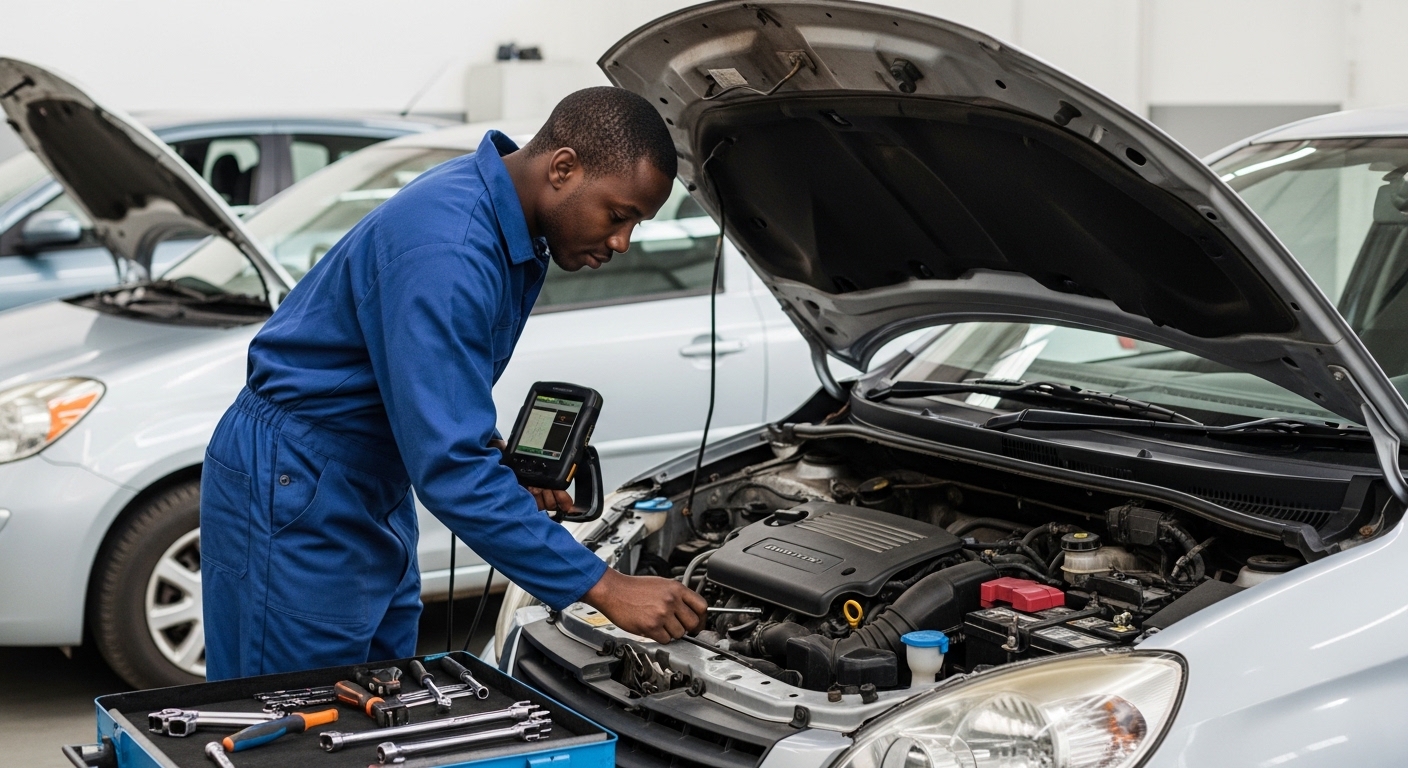 A hands-on check complements the vehicle records and inspection documents.
Use this inspection sequence:
- Confirm the make, model, year and engine capacity.
- Match the chassis or frame number to every document.
- Check mileage evidence against visible wear.
- Look for accident, corrosion and flood indicators.
- Check warning lights and electrical functions.
- Inspect tyres, glass, lights, paintwork and interior wear.
- Review service records where available.
- Compare at least three similar vehicles.
- Consider likely parts and servicing costs.
- Ask what remains your responsibility after purchase.
How Should You Read a Japanese Auction Sheet?
An auction sheet is a Japanese auction record describing the vehicle’s condition. It may include mileage, exterior damage, interior condition, repairs and an inspection grade.
The grade is a useful summary, not a warranty. Read the written comments and damage map as well. A grade may not explain every detail that affects your decision.
Look for consistency between the auction sheet, photographs, inspection report and current vehicle description. If one document says the vehicle has no damage while another shows repairs or paintwork, ask for an explanation.
An inspection report also has limits. It records what the inspector observed at that time. It cannot promise future reliability, eliminate normal maintenance or reveal every hidden fault.
 The paperwork should support the price before any money changes hands.
What Should a Remote Buyer Request?
Request clear copies of:
- The auction sheet.
- The inspection report.
- Chassis and engine details.
- Vehicle photographs.
- The proforma invoice.
- Shipping information.
- A written list of included and excluded charges.
When reviewing a Japan-sourced vehicle, the useful question is not simply, “What grade is it?” Ask what the grade, written notes and inspection report reveal together. That approach gives you better information before payment, while still leaving room for normal ownership risks.
Is It Better to Buy Locally or Import from Japan?
The published import FAQ gives an estimate of 6 to 10 weeks from purchase confirmation to delivery in Zambia (Zambia import FAQ, 2026). A local purchase may be quicker and easier to inspect in person. Japan sourcing may offer access to different vehicles and pre-shipment documentation, but the choice and timing depend on the seller, route and transaction.
| Factor | Buy locally | Source from Japan |
|---|---|---|
| Delivery | May be faster, depending on the seller | About 6 to 10 weeks from purchase confirmation |
| Physical inspection | May be possible before payment | Relies on auction and inspection evidence |
| Vehicle choice | Depends on local supply | May provide access to different Japanese-market vehicles |
| Documentation | Ownership and registration need checking | Auction, export and shipping documents need checking |
| Customs planning | May already be reflected in the asking price | Must be planned separately |
| Main risk | Unclear history or ownership | Remote purchase and delayed delivery |
| Best fit | Buyers prioritising speed | Buyers prioritising choice and records |
Zambia is landlocked, so the logistics route matters. A Japan-sourced vehicle may travel from Japan to Dar es Salaam or Durban, then continue overland into Zambia. Port handling and inland transport should form part of your planning.
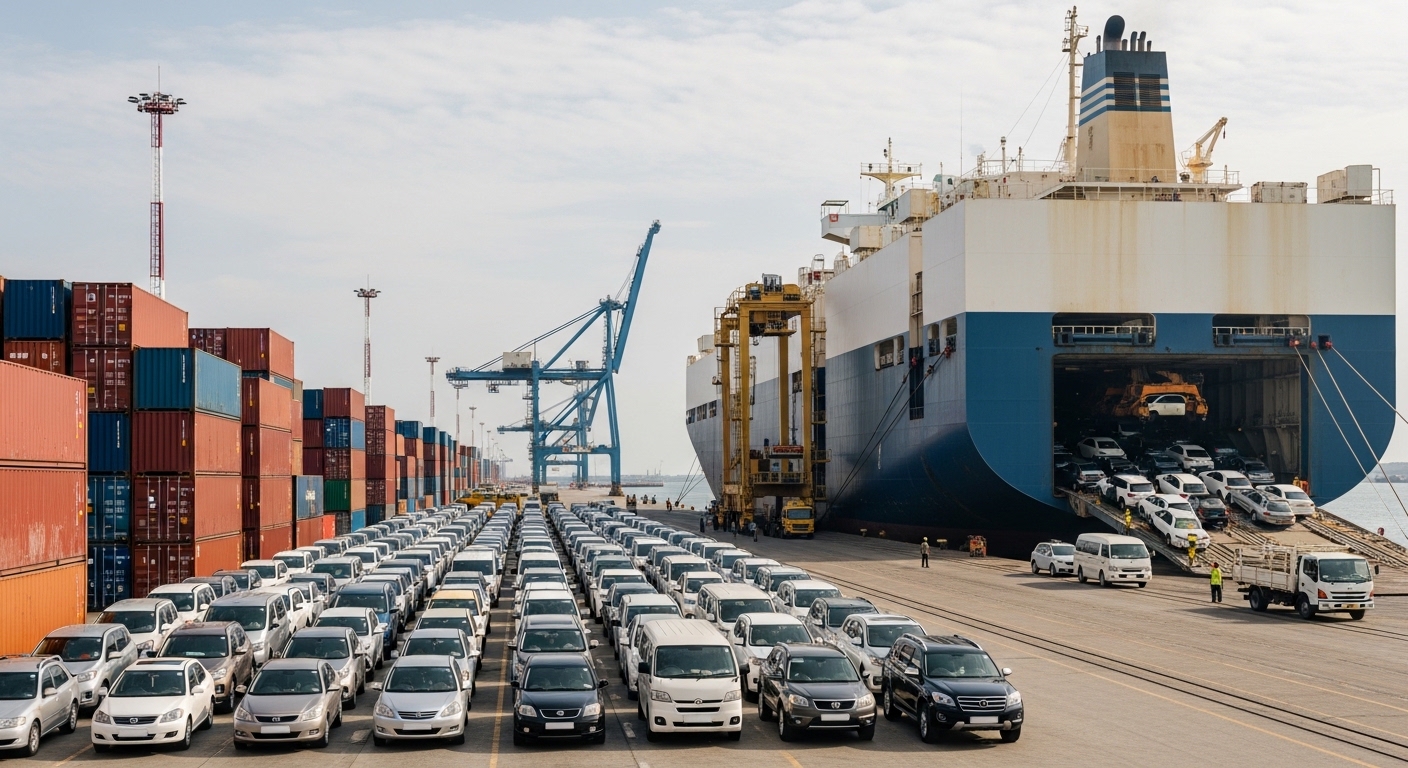 Vehicles travel by sea before continuing overland into Zambia.
Right-hand drive is required for Zambia-eligible vehicles, and no simple maximum vehicle age is stated in Carbarn’s Zambia import rules. Used-vehicle classification, valuation and age-related tax treatment still need to be checked against current ZRA guidance. That may widen the choice for buyers on a tighter budget, but it does not remove the risks of age.
Customs charges depend on the vehicle and current Zambian rules. Engine capacity and vehicle age can affect the assessment. Do not rely on a seller’s old estimate or a figure copied from another country.
What Documents Should You Check Before Paying?
In 2026, RTSA’s first-registration guidance names at least eight document or verification categories, including customs clearance, a ZRA receipt, customs declaration, release order, Interpol clearance, physical inspection, owner identification and insurance (RTSA, “RTSA official website”, 2026). Requirements can change, so check the current official guidance before payment.
Keep the vehicle details and document trail together during your checks.
For a Locally Sourced Vehicle
Ask to see:
- Seller identification.
- Original registration documentation.
- Proof of ownership.
- A sale agreement or letter of sale.
- Chassis and engine details.
- RTSA inspection evidence where required.
- Insurance documentation.
- Any applicable tax-clearance or police documentation.
Check that the seller’s name matches the ownership documents. Compare the chassis number on the vehicle with the number on every paper. A mismatch is a reason to stop and investigate.
For a Japan-Sourced Vehicle
Request:
- A proforma or commercial invoice.
- The official auction sheet.
- The inspection report.
- Chassis and engine details.
- The bill of lading.
- Customs-clearance documentation.
- The customs declaration.
- The release order.
- Interpol clearance where required.
- RTSA physical inspection and registration documents.
The exact process may differ by transaction. The safe approach is to confirm which documents apply, who supplies them and who pays each related charge.
Never transfer money to a personal account simply because a seller has sent attractive vehicle photographs. Confirm the seller, invoice and payment instructions independently.
Lowering the Long-Term Cost of Ownership
AutoTrader Zambia’s vehicle search lets buyers compare at least six ownership variables, including fuel type, engine size, transmission, mileage, age and body type (AutoTrader Zambia, “Cars for Sale in Zambia”, 2026). Use those filters as a starting point, then consider the costs that do not appear in a listing.
The best-value car is usually the one you can fuel, service and resell without unnecessary difficulty. A lower purchase price may not help if the vehicle needs rare parts or specialist repairs.
Check the following before choosing:
- Engine size and fuel type.
- Tyre size and local availability.
- Common service parts.
- Hybrid battery and drivetrain evidence.
- Automatic-transmission condition.
- Suspension and underbody condition.
- Insurance and registration costs.
- Expected resale demand.
- Access to mechanics familiar with the model.
Your driving pattern matters. Short urban trips place different demands on a vehicle than long inter-town journeys. A compact car may suit a Lusaka commute, while a family buyer may need more seating and luggage space.
A hybrid can reduce fuel use in some urban driving conditions, but the specific vehicle still needs careful inspection. Do not assume every hybrid battery is healthy because the car starts and drives normally.
A larger car can also be poor value when its space is rarely used. You may pay more for fuel, tyres and suspension while gaining little practical benefit.
Who Should Skip a Particular Used Car?
Consider walking away when:
- The history is unclear.
- The chassis number does not match.
- The inspection evidence is missing.
- The model has difficult-to-source parts.
- The vehicle is too large for your regular use.
- The hybrid battery condition cannot be assessed.
- The seller cannot explain excluded costs.
- The price depends on documents that have not been provided.
The right comparison is not “Which car is cheapest?” It is “Which car leaves the fewest expensive questions unanswered?” That shift helps you judge value before the advert price starts influencing your decision. Importing may be cheaper in some cases, but it is not cheaper across the board; compare the full cost with a comparable local vehicle.
check Japanese car specifications to compare engine, fuel and body information.
How Does Carbarn Help Zambian Buyers Compare Japan-Sourced Cars?
Carbarn provides a Japan-sourced buying process where buyers can review two vehicle reports before payment, the official Japanese auction sheet and an in-house inspection report (Carbarn, “How to Buy a Japanese Car from Carbarn Zambia”, 2026).
The auction sheet records the Japanese auction assessment. The inspection report adds condition observations and defect comments. Together, they can show recorded mileage, visible imperfections, tyres, underbody condition and interior observations.
These reports reduce uncertainty, but they do not promise future reliability. They cannot replace normal servicing, confirm every future repair or act as a manufacturer warranty.
Carbarn states in its import rules that its vehicles receive JEVIC certification before leaving Japan. Zambia's broader pre-shipment roadworthiness framework may also involve inspection through appointed agents, with any required post-arrival RTSA inspection separate from Carbarn's process. Its buying guide explains that shipping may use RoRo transport to Dar es Salaam, with Durban available for some transactions. Allow about 6 to 10 weeks from purchase confirmation to delivery, subject to route, customs and inland transport.
Carbarn’s buying guide states that the all-inclusive vehicle price covers the vehicle, shipping and JEVIC inspection. Customs duties, local registration fees and port-clearance charges remain separate customer responsibilities. Ask for the exact inclusions on the official proforma invoice.
Payment is currently made in full upfront through the official payment process. Financing and instalment payments should not be assumed. Imported vehicles do not include a manufacturer warranty, although reliable local service providers may be recommended.
The dashboard provides access to invoices, inspection sheets, the bill of lading, certificates and vessel tracking. This gives you a document trail to review as the vehicle moves from Japan towards Zambia.
What Should Buyers Do Next?
Compare suitable vehicles by purpose and broad ZMW budget. Review the available reports before payment. Check the current import rules. Then confirm the estimated landed-cost information and every exclusion in writing.
browse Japan-sourced vehicles to compare current vehicles by model and use. read how to buy to understand invoices, payment and shipment tracking. review import rules to confirm eligibility and buyer responsibilities.