Japan Customs trade statistics show that 15,759 used passenger cars left Japan for Zambia between January and September 2026. That figure was checked on 21 November 2026, and it is up 25.9% on the 12,520 cars recorded a year earlier. The count gives a plain answer to anyone wondering whether buying from Japan is a well-worn route: it is a busy one.
This guide explains what that number actually measures, what it leaves out, and why used cars from Japan to Zambia keep gaining ground. It then turns the data into five practical checks you can run before paying for anything.
Quick Answer
- 15,759 used passenger cars left Japan for Zambia in Jan–Sep 2026, up 25.9% on 12,520 a year earlier (Japan Customs, checked 21 Nov 2026).
- The count follows the declared destination, so some Zambia-bound cars may be booked under another country.
- Zambia sets no age limit on imported cars.
- Cars land at Dar es Salaam or Durban, then travel overland into Zambia.
- The listed price excludes duties, registration fees and port clearance.
What does the 15,759 figure tell you?
The 15,759 figure is a Japan Customs export count. It covers used passenger cars recorded under customs code HS 8703 that cleared Japanese customs with Zambia as the declared destination between January and September 2026. It tells you how many cars left Japan for Zambia, not how many were registered on Zambian roads.
The comparison with the same nine months of 2025 is what makes the figure useful. Japan Customs recorded 12,520 cars for Jan–Sep 2025, so the 2026 count is up 25.9%.
| Period |
Passenger cars exported, Japan to Zambia |
Change |
| Jan–Sep 2025 |
12,520 |
|
| Jan–Sep 2026 |
15,759 |
+25.9% |
Source: Japan Customs trade statistics, HS 8703, declared destination Zambia. Checked 21 November 2026.
HS 8703 is the harmonised customs code for motor cars built mainly to carry people. In plain words, it means the hatchbacks, saloons, SUVs and people-carriers you'd expect to see on Great East Road. It does not cover trucks or buses, which sit under different codes.
A rising count on a busy route is reassuring on scale. Thousands of cars have made this journey in 2026 alone, and the shipping lines, clearing agents and inland transporters along the route handle it every week. That is good news if you are nervous about being the odd one out.
The figure says nothing about any single car, though. A route can be popular and still carry badly described vehicles. Scale tells you the process works. Only the paperwork on a specific car tells you whether that car is worth the money.
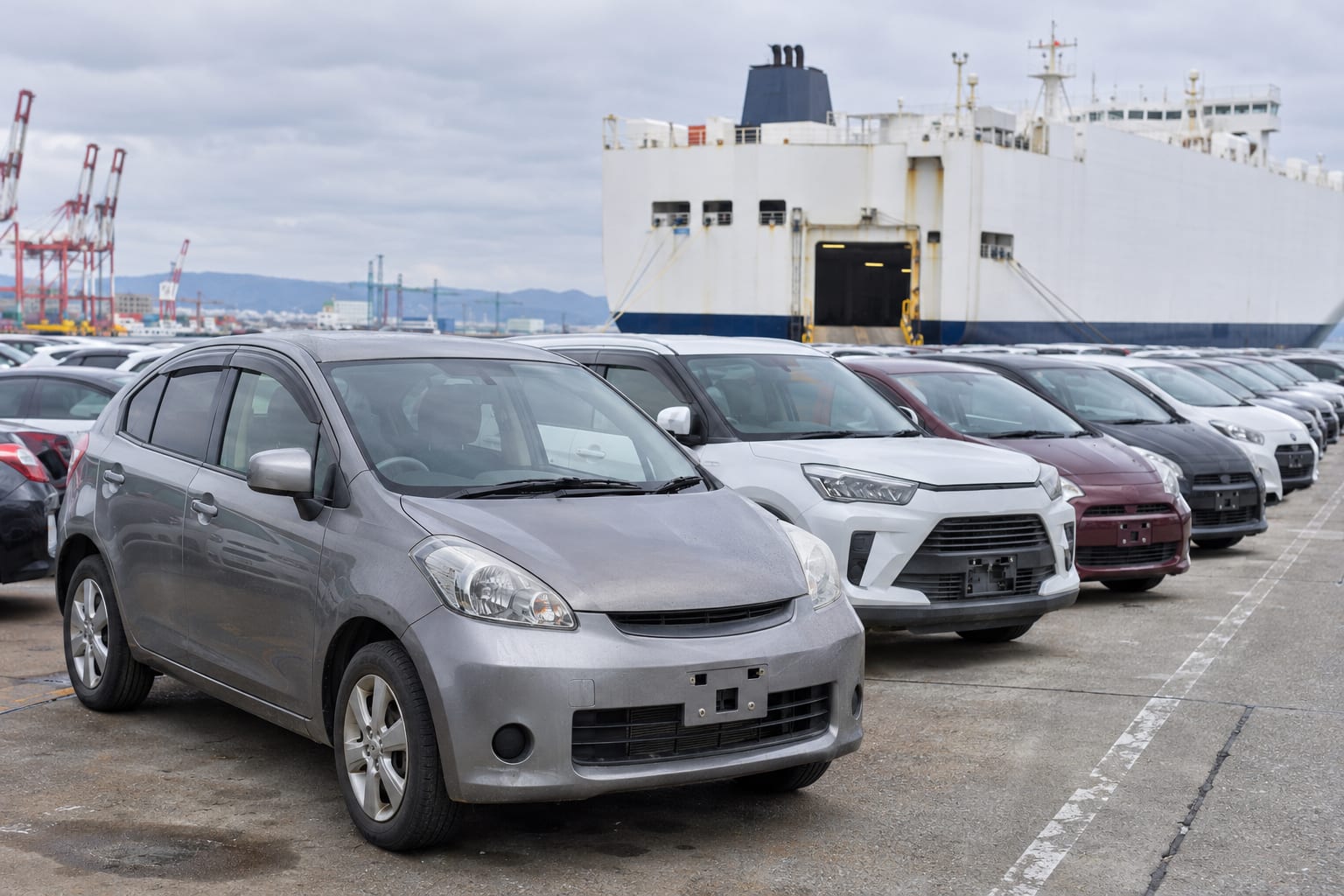 Illustration: Rows of used cars parked beside a car carrier ship at a port.
What can't the count tell you?
The count cannot tell you exactly how many cars ended up in Zambia. Japan records the destination declared on the export paperwork. Zambia is landlocked, so every car lands at a coastal port first, usually Dar es Salaam in Tanzania or Durban in South Africa, and then moves overland. Some Zambia-bound cars may be declared under the port country or another transit destination instead.
The reverse can also happen. A car declared for Zambia might be sold on in Tanzania before it ever crosses the border at Nakonde or Chirundu. Customs data captures intent at the point of export, not what happens three weeks later at a port yard.
Nobody has published a reliable figure for the size of this gap, so this guide won't guess at one. Treat 15,759 as a strong indicator of demand, not a precise count of Zambian registrations. The direction of travel, up by a quarter in a year, is the more dependable signal than the exact total.
The count also says nothing about what the cars cost to land. Export statistics stop at the Japanese quayside. Shipping, port handling, the Zambia Revenue Authority (ZRA) assessment, inland transport and registration all come afterwards. Our guide to duty, port routes and what it really costs to land a car in Zambia walks through each of those stages. For the scope of this article, keep one idea in mind: the Customs figure measures volume, not value.
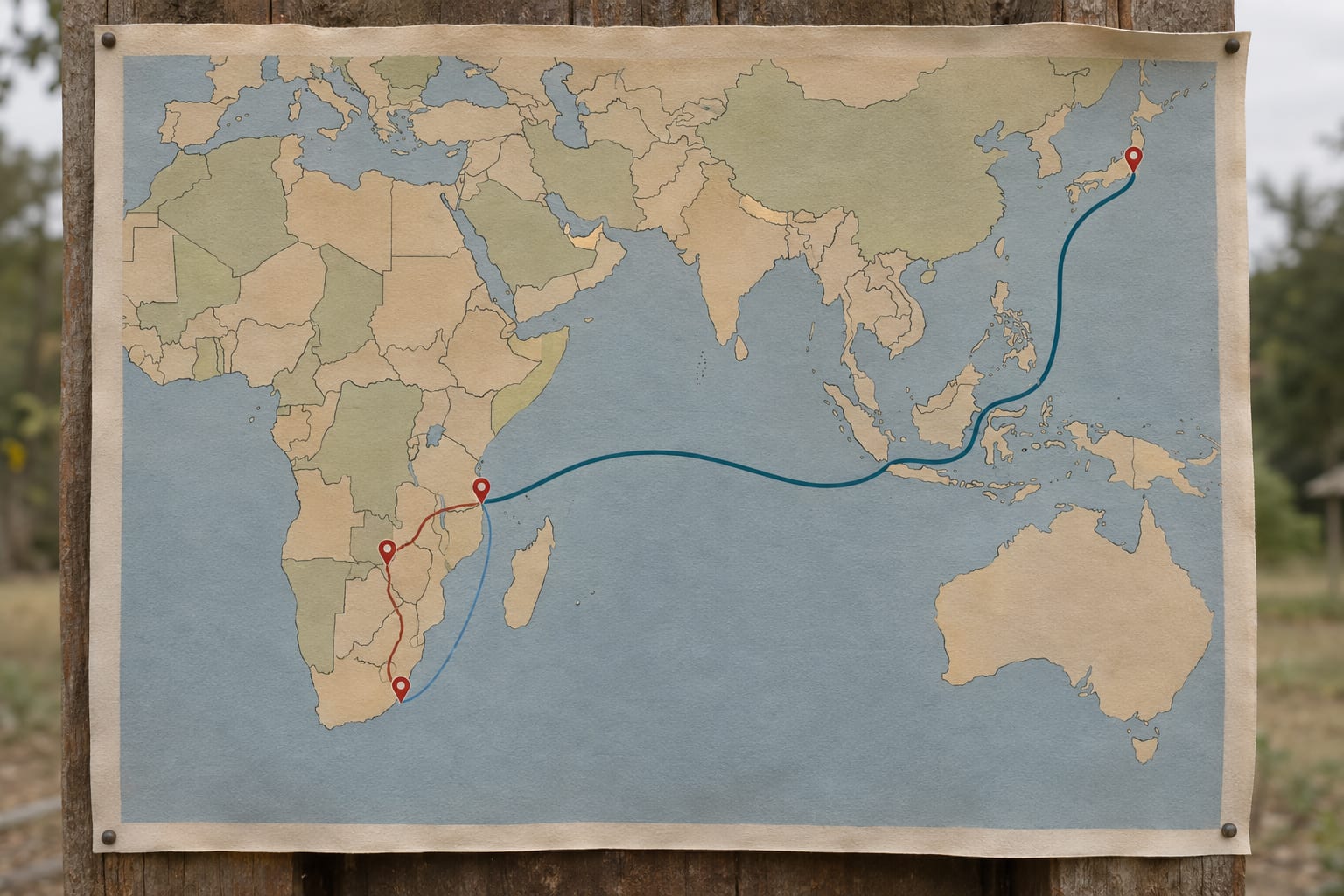 Illustration: Map illustrating shipping and inland routes from Japan to Zambia via African ports.
Why are more buyers choosing used cars from Japan to Zambia?
The Customs data shows that the volume rose. It does not say why. What follows is interpretation, based on the rules Zambian buyers work with and the kind of cars they tend to pick, not a proven cause. Three factors stand out as the most likely drivers of a 25.9% rise in a single year.
No import age limit. Zambia sets no maximum age on imported cars, which is explained in full in our guide to whether Zambia has an age limit on car imports. So a 2010 or 2012 car that still has plenty of life is a real option here.
A wide choice of older, cheaper stock. Japanese auctions move enormous numbers of well-kept cars every week. For a buyer with a fixed Kwacha budget, that opens up models and trim levels that a Lusaka lot rarely stocks. The trade-off is honest and worth stating. An older car needs a closer read of its condition reports, a quick check on parts availability, and realistic expectations on resale.
Fuel-saving hybrids. Fuel is a daily cost in Zambia, and Lusaka traffic is stop-start for long stretches. Japanese-market hybrids were built for exactly that pattern. They also handle long inter-town runs to Ndola, Livingstone or Chipata without drama.
None of these reasons is new. What may have changed is awareness. More Zambians have seen a neighbour's import arrive without trouble, and the route feels less like a leap of faith than it did a few years ago.
What do buyers tend to look for?
Buyers generally want one of two things. One group wants a small hybrid for city running and modest fuel bills. The other wants comfort and space for family trips and long inter-town drives. The models below suit both groups.
Small hybrids for Lusaka running
The Honda Vezel is a compact hybrid SUV with a raised ride height, which helps on rough side roads and speed humps. It is an easy car to live with around town and comfortable enough for a weekend run to Kabwe. Browse the current Vezel listings for prices, and remember duties and clearance come on top.
The Nissan Note is the budget-friendly pick of the two. It's a small hatchback with a very efficient hybrid system and an easy, upright driving position. Check the live listings for current prices, and remember duties and clearance come on top. For a first car or a second household car, it makes a lot of sense.
Family comfort and long-distance running
The Toyota Prius is a long-running hybrid with plenty of rear and cabin space. Check parts and servicing with a local workshop before you buy, as with any import. Prices vary widely by year and grade, so use the live listings, and remember duties come on top. It is a strong option if you cover long distances and want low fuel costs without a tiny cabin.
The Toyota Alphard is the choice for big families, church groups and anyone who ferries passengers between towns. It is a large, comfortable people-carrier with a reputation for durability.
What tends to be poor value for Zambia
Large-engine petrol SUVs and luxury saloons from European brands are a weaker buy for most Zambian households. They're thirsty, specialist parts can take weeks to arrive, and few local workshops know them well. The auction price might look tempting. The three years of ownership afterwards usually don't.
For a longer list with more detail on each model, read our guide to popular Japanese used cars in Zambia.
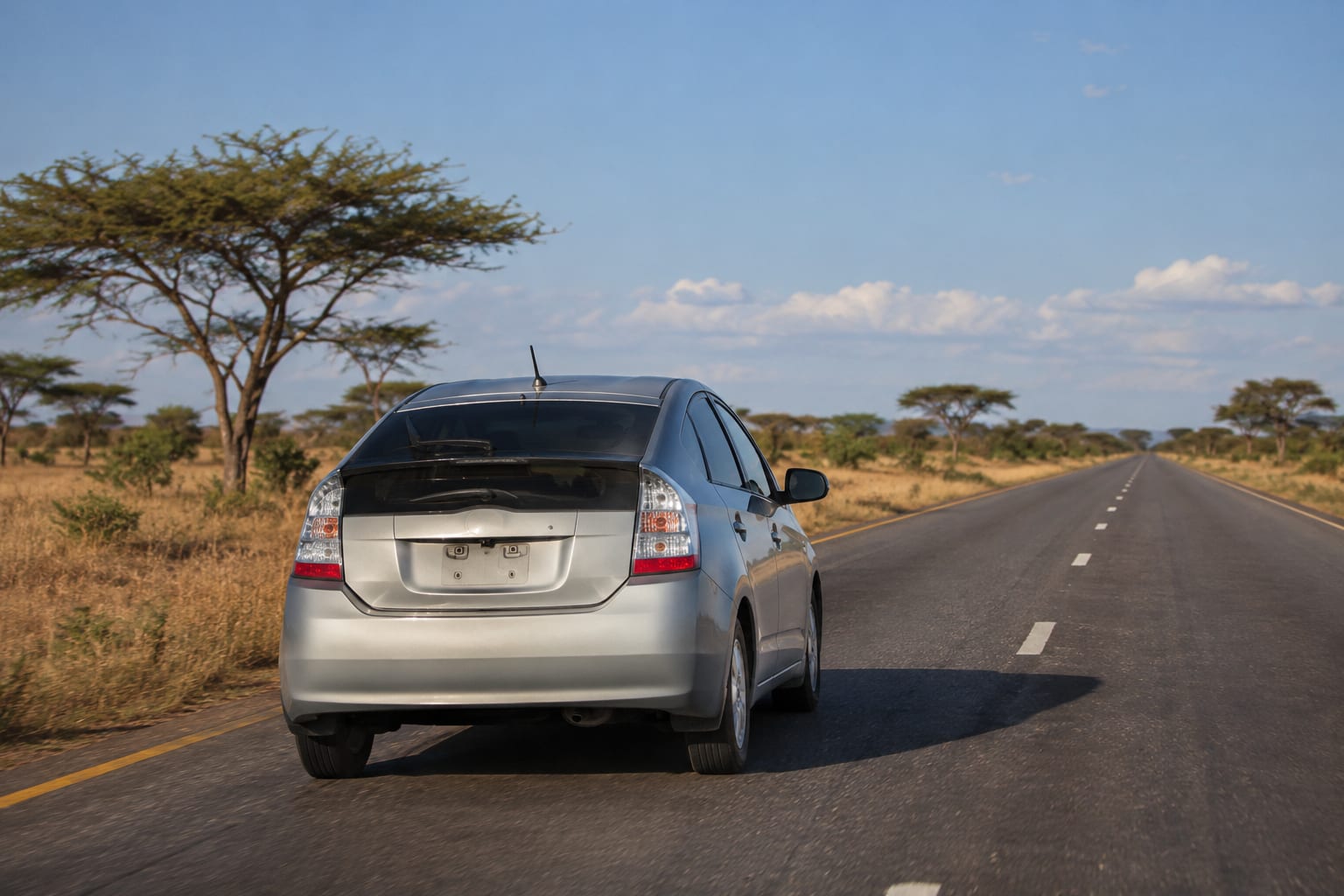 Illustration: A silver Toyota Prius on a straight highway through open savanna.
Buying from a busy market: five checks
A busy market is a safer market, but it is also a crowded one. More buyers means more exporters competing for your deposit, and not all of them show you the same evidence. These five checks separate a well-documented import from a hopeful one. Run them on any car, from any seller, before money moves.
1. Read the auction sheet and its grade
The auction sheet is the official inspection report produced at the Japanese auction house before the car was sold. The auction house's inspector walks around the car and records its condition. The auction grade is the headline score on that sheet. Common grades include 5, 4.5, 4, 3.5, 3 and 2, with R marking a repaired car. Quote the grade as printed, and read the damage diagram underneath it. The diagram is where small dents, scratches and repairs are marked.
2. Ask for a second, in-house inspection report
The auction sheet is a snapshot from before the exporter bought the car. A second inspection by the exporter's own team, with photos and written defect notes, tells you whether anything changed and whether the sheet was honest. If a seller offers only the auction sheet, or only their own photos, you're working with half the picture.
3. Check for the JEVIC certificate
JEVIC stands for the Japan Export Vehicle Inspection Center, which carries out pre-shipment inspections in Japan. Confirm whether a JEVIC inspection is included and who is paying for it. A good exporter includes it in the quoted price and says so plainly.
4. Know exactly what the price includes
An all-inclusive price from a reputable exporter usually covers the vehicle, shipping to the port and the JEVIC inspection. It does not cover customs duty, port clearance or Zambian registration. Those are yours. The proforma invoice is the formal document that sets out what you're paying for, and it will show a CIF value, meaning cost, insurance and freight to the port of entry.
ZRA assesses duty on the vehicle under the current import regulations. Registration with the Road Transport and Safety Agency is a separate step with its own cost, covered in our guide to the RTSA registration fee for an imported car. Don't rely on a percentage someone posted on social media. Confirm the current assessment before you order.
5. Plan around the 6 to 10 week timeline
Expect about 6 to 10 weeks from purchase confirmation to delivery in Zambia. That covers inspection, JEVIC certification, waiting for the next RoRo vessel, the sea leg to Dar es Salaam or Durban, port handling and the overland journey. Vessel schedules and border processing can stretch it. Our step-by-step guide on how to buy a Japanese car for Zambia shows what happens at each stage.
Who should skip this route? Anyone who needs a car this week, or who wants to pay in instalments. Importing from Japan rewards patience and a budget that is ready in full. If either is missing, a local purchase is the more honest fit.
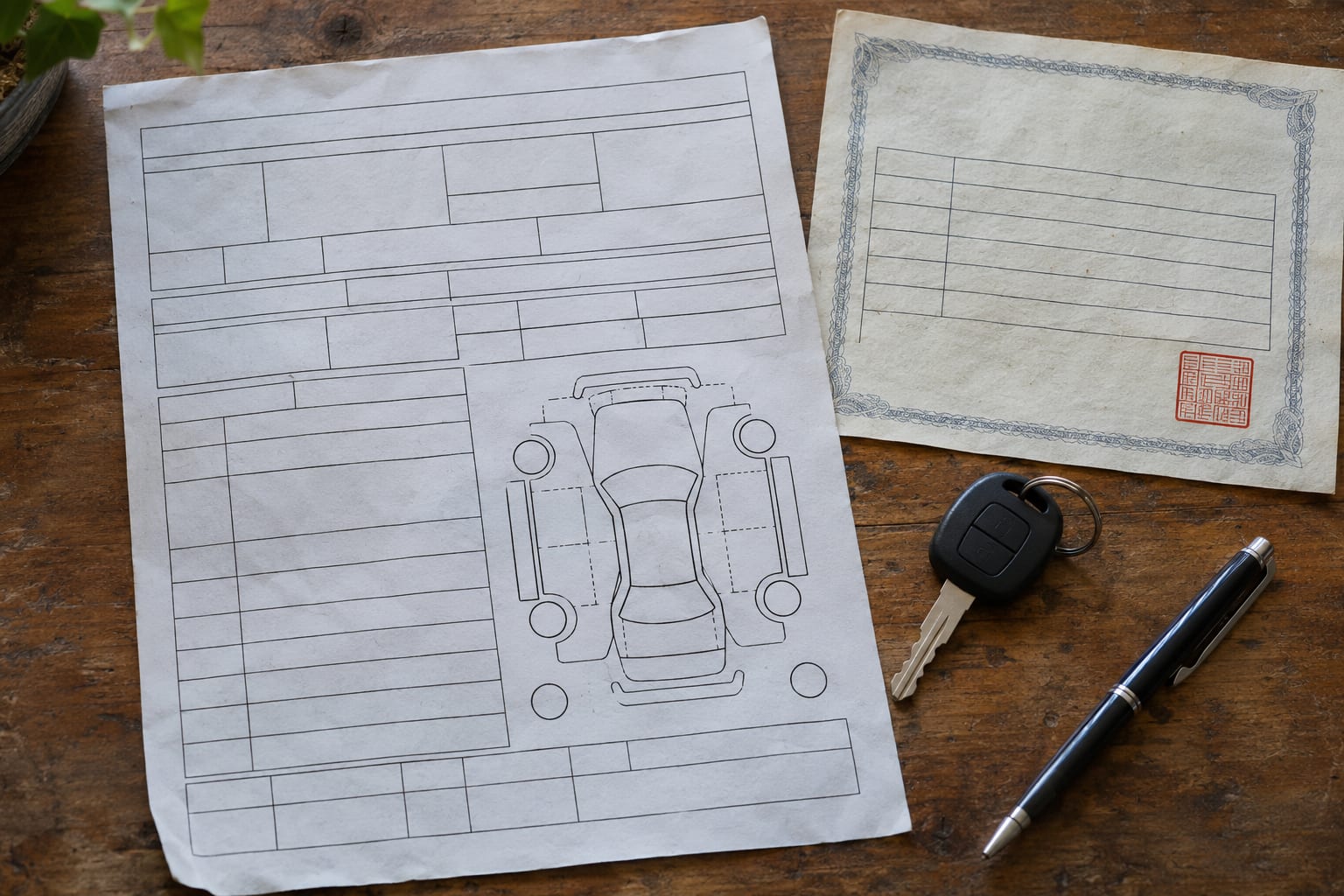 Illustration: Forms with a car diagram and red stamp sit beside a car key and pen.
How does Carbarn handle the route?
Carbarn is a Yokohama-based exporter that owns every car it lists for Zambia. There are no brokers in the chain and no third-party cancellations. Each listing shows two reports before you pay: the official Japanese auction sheet and Carbarn's own inspector report, with photos and written defect notes. You can browse the full Zambia inventory at carbarn.co.zm/cars.
The listed price is all-inclusive for the Japan side. It covers the vehicle, RoRo shipping to Dar es Salaam, with Durban as the alternative, and the JEVIC inspection. It is not the landed or on-road total. Customs duties, port clearance charges and Zambian registration are paid by you.
Payment is in full and up front, by bank transfer on the official proforma invoice or by card through the site. Carbarn offers no financing, and imported cars carry no manufacturer warranty. Once you've paid, the dashboard holds your invoice, inspection sheets, bill of lading, certificates and live vessel tracking as the car moves from Ready to Ship through Shipped to Arrived.
Each listing shows the engine size, odometer reading and auction grade as printed on the auction sheet, alongside Carbarn's own inspection notes on any marks or wear. That's the level of detail to expect before you commit a single Kwacha. Start from the model pages, such as the Honda Vezel or Toyota Prius, and work through to the live listings.
Carbarn has no office, showroom or test-drive facility in Zambia. Sales, payment and support run through Carbarn Japan and the online dashboard.
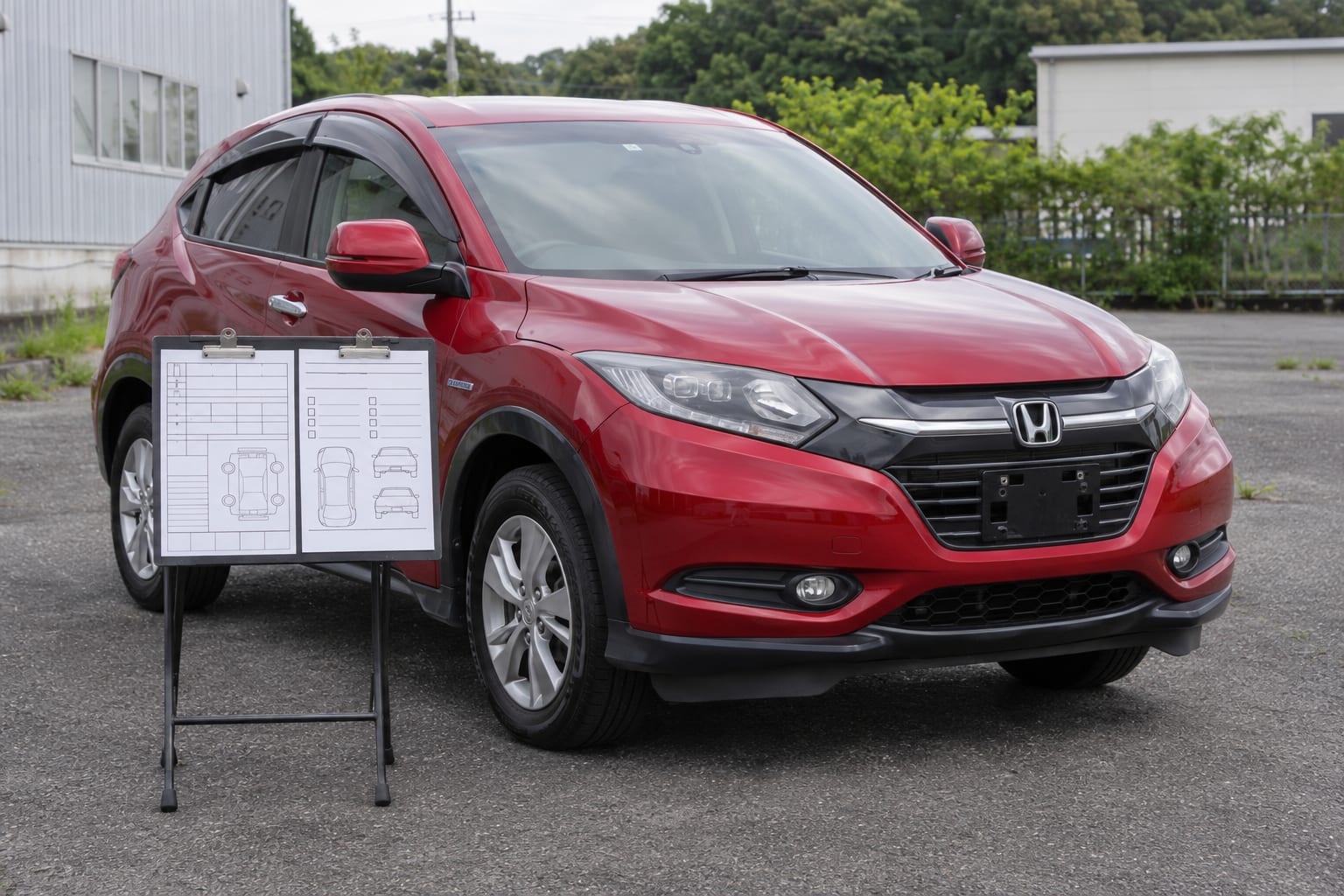 Illustration: A Honda Vezel hybrid shown with the two reports to expect: an auction sheet and an exporter's inspection report.
Is the Japan route right for you?
The Japan route is right for you if you can wait about 6 to 10 weeks, pay in full, and read the paperwork before you fall for the photos. The volume is real and rising, the count has honest limits, and the five checks above are what protect you in a busy market.
If you need a car this week, or you're relying on instalments, buy locally and don't look back. If you have the time and the budget, a well-documented import from Japan remains one of the most sensible ways for a Zambian household to get more car for its Kwacha. Start with the inventory, read the two reports on anything that catches your eye, and work through the buying guide before you order.
What this does not show
The Customs count measures cars leaving Japan with Zambia as the declared destination. It does not show how many of those cars were registered in Zambia, how many were sold on in a transit country, or how many Zambia-bound cars were booked under another destination. It says nothing about the condition, price or landed cost of any single car, and it does not explain why the number rose. The reasons given above are interpretation, not measured cause.
Method and sources
- Japan Customs trade statistics: export count under HS 8703 (motor cars built mainly to carry people), declared destination Zambia, for Jan–Sep 2025 and Jan–Sep 2026. Checked 21 November 2026.
- Zambia import rules, payment terms and the 6 to 10 week timeline: Carbarn's import rules and regulations page and published service terms. Checked 21 November 2026.
- Model notes are the author's assessment of buyer fit, not measured data.