A long Botswana road trip does not automatically require a 4WD. If most of your kilometres are on sealed roads, the real choice is between lower fuel use and extra cabin space. The Toyota C-HR is smaller, lighter and easier around town. The Nissan X-Trail gives families more room for people, luggage and equipment.
Both can make sense for travel between Gaborone, Francistown, Maun, Kasane, Lobatse and other major centres. Neither should be treated as a deep-sand, mud or serious safari-track vehicle. Japanese-import specifications also vary by model year, grade and drivetrain, so the badge alone is not enough.
This comparison focuses on 2WD versions, using a listed 2017 Toyota C-HR 1.8-litre hybrid and a listed 2017 Nissan X-Trail 2.0-litre petrol as the main references. Confirm the exact grade and model code from the vehicle documents before purchase.
Quick Answer
- Choose the Toyota C-HR 2WD hybrid for lower likely fuel use, compact dimensions and easier urban driving.
- Choose the Nissan X-Trail 2WD for family passengers, luggage and a more spacious touring cabin.
- The shortlisted X-Trail is a 2.0-litre petrol, CVT, 2WD model with seven seats.
- Nissan lists 16.4 km/L under Japan’s JC08 test for the relevant T32 2WD petrol grade.
- Neither vehicle replaces a proper 4WD on deep sand, mud or difficult safari routes.
Which SUV is better for Botswana’s sealed-road trips?
For mostly sealed-road travel, the Toyota C-HR suits buyers who prioritise efficiency and compact driving, while the Nissan X-Trail suits buyers who need more space. In 2026, UK Government travel advice warned travellers about wildlife, livestock and flooding outside urban areas in Botswana (GOV.UK, “Botswana: Safety and security”, 2026).
A sealed-road trip means highways and maintained town-to-town roads, not every route that happens to appear on a map. A vehicle may leave the tarmac for a fuel stop, lodge entrance or roadside shoulder. That does not automatically mean you need AWD or 4WD.
2WD sends engine power to two wheels, usually the front wheels on these Japanese-market versions. It works well on normal sealed roads. It offers less traction than AWD or 4WD when the surface becomes loose, deeply wet or soft.
The route matters more than the SUV badge. A C-HR can be perfectly sensible for paved travel between major centres. An X-Trail can provide useful extra clearance and space, but its 2WD system still has limits.
A 2WD SUV can be a sensible Botswana road-trip choice when most travel stays on sealed roads. Government travel advice warns about livestock, wildlife and flooding outside major urban areas. Route planning matters more than simply choosing the larger SUV.
For the import process, see the Botswana vehicle buying guide, review Botswana import rules, and check the Botswana car specifications database before comparing vehicles.
What does 2WD mean for a road-trip buyer?
2WD does not mean the vehicle is unsafe on a sealed highway. It means you should assess the surface before continuing. Loose sand, deep mud, standing floodwater and steep slippery tracks can defeat a front-wheel-drive SUV.
Ground clearance helps a vehicle pass over bumps and ruts. It does not create extra driven wheels. A 2WD X-Trail with 195mm of clearance still cannot provide the traction of a proper 4WD on soft sand.
At night and in low light, wildlife and livestock also create greater risks. Slow down, keep the windscreen clear and avoid treating a sealed road as a guarantee of easy driving.
What are the key differences between the C-HR and X-Trail?
The Toyota C-HR is a compact five-seat crossover, while the Nissan X-Trail is a larger family SUV that can offer seven seats in the relevant petrol grade. In 2026, Toyota’s Japanese specification page listed the C-HR ZYX11 at 1,797cc with front-wheel drive, a 43-litre tank and five seats (Toyota Japan, “C-HR G vehicle information”, 2026).
The shortlisted 2017 C-HR is a 1,800cc hybrid with 2WD, five seats, grade 4 and 113,000 kilometres. The shortlisted X-Trail is a 2,000cc petrol vehicle with CVT, 2WD, seven seats, grade 4 and 89,209 kilometres. Confirm each exact grade and model code from the vehicle documents.
| Category |
2017 Toyota C-HR listed vehicle |
2017 Nissan X-Trail listed vehicle |
| Vehicle type |
Compact crossover SUV |
Larger family SUV |
| Fuel type |
1.8-litre hybrid |
2.0-litre petrol |
| Drivetrain |
2WD, front-wheel drive |
2WD, front-wheel drive |
| Transmission |
Electronic continuously variable transmission |
CVT |
| Seating |
Five seats |
Seven seats, subject to exact grade confirmation |
| Main strength |
Economy and urban manoeuvrability |
Passenger space and luggage flexibility |
| Official fuel reference |
Varies by year and test cycle |
16.4 km/L JC08 for the relevant 2WD petrol grade |
| Fuel tank reference |
43 litres on later ZYX11 specification |
60 litres on the matching T32 specification |
| Body size |
4,385mm long on later ZYX11 data |
4,640mm long, 1,820mm wide and 1,715mm high on the 2017 three-row 2WD 20X specification |
| Best fit |
Couples and small households |
Families and loaded road trips |
| Main compromise |
Smaller rear area and boot |
Larger footprint and potentially higher fuel use |
| Off-road boundary |
Not a serious off-road vehicle in 2WD form |
More space, but still not a 4WD in 2WD form |
The two vehicles also differ in how buyers should read their specifications. Toyota’s C-HR fuel page gives a broad historical range of 15.2 to 30.4 km/L under JC08 across several years, engines and drivetrains (Toyota Japan, “C-HR fuel information”, 2026). That is not one guaranteed result for every 2017 ZYX10.
Nissan’s T32 grade list is more useful for this comparison because it separates 2WD petrol, 2WD hybrid and four-wheel-drive grades. The 20X three-row 2WD petrol version is listed at 16.4 km/L under the JC08 test (Nissan Japan, “X-Trail T32 grade outline”, 2017).
For model-year details, compare the Toyota C-HR specifications by model year.
Toyota C-HR 2WD hybrid: compact and efficient
The Toyota C-HR 2WD hybrid makes the most sense for a couple or small household that wants a compact SUV with lower likely fuel use. The shortlisted 2017 C-HR uses a 1,800cc hybrid powertrain, front-wheel drive, a CVT and five seats, based on the supplied vehicle record. Confirm its exact grade and model code from the vehicle documents.
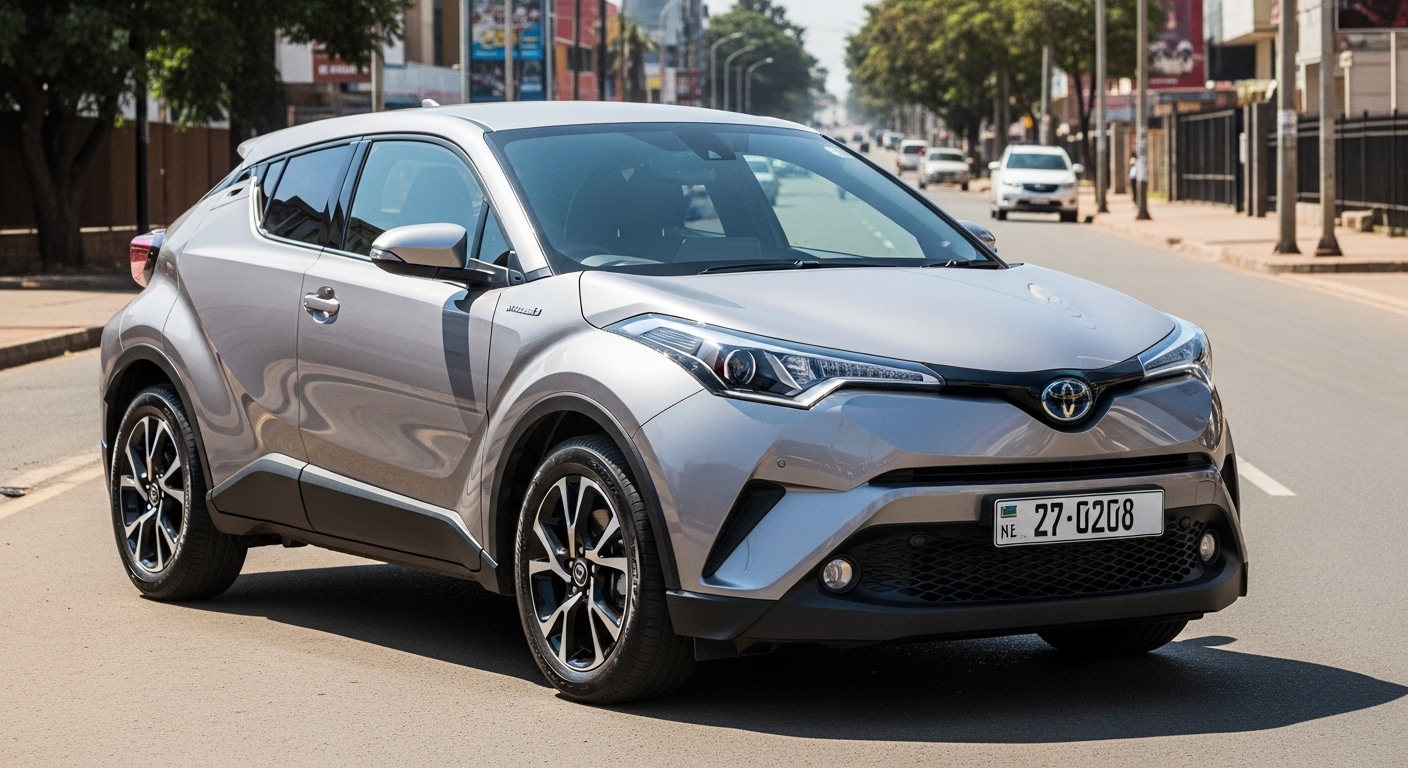 2017 Toyota C-HR
The C-HR’s biggest advantage is its size. At around 4.4 metres long in the later ZYX11 specification, it is easier to place in town traffic and parking areas than the larger X-Trail (Toyota Japan, “C-HR G vehicle information”, 2026). That matters if your road trips begin with daily driving around Gaborone.
The hybrid system is also useful in stop-start traffic, where repeated braking and acceleration give it more opportunity to recover energy. On a steady highway, the advantage may narrow. Speed, wind, air-conditioning, tyre pressure, road surface and luggage all affect fuel use.
The main compromise is space. The C-HR has five seats, but its sloping rear styling and darker rear cabin can make it feel less open than the X-Trail. Two adults and soft bags should be straightforward. Five adults with hard cases, a cooler and emergency equipment may feel cramped.
The supplied vehicle is a 2017 C-HR with a grade 4 auction result and 113,000 kilometres. Those details matter more than a general C-HR description. Confirm the exact grade and model code from the auction or chassis documents. Before payment, confirm the chassis code, hybrid system, auction sheet, inspection report and exact fuel figure for that vehicle.
Toyota’s Japanese C-HR information shows why variant discipline matters. In 2026, a later ZYX11 front-wheel-drive hybrid was listed at 25.8 km/L WLTC and 30.4 km/L JC08, but Toyota’s historical range covers multiple engines and drivetrains. Those figures should not be transferred automatically to a 2017 ZYX10.
[UNIQUE INSIGHT] The C-HR is not simply the “small X-Trail”. It serves a different buyer. Its value comes from using less space and potentially less fuel, not from matching the X-Trail’s passenger or luggage capacity.
Nissan X-Trail 2WD petrol: the stronger family tourer
The Nissan X-Trail 2WD petrol is the stronger choice when long trips involve several adults, large bags or bulky equipment. The shortlisted 2017 X-Trail uses a 2,000cc petrol engine, CVT, front-wheel drive and seven seats, with grade 4 and 89,209 kilometres recorded in the vehicle shortlist. Confirm its exact grade and model code from the vehicle documents.
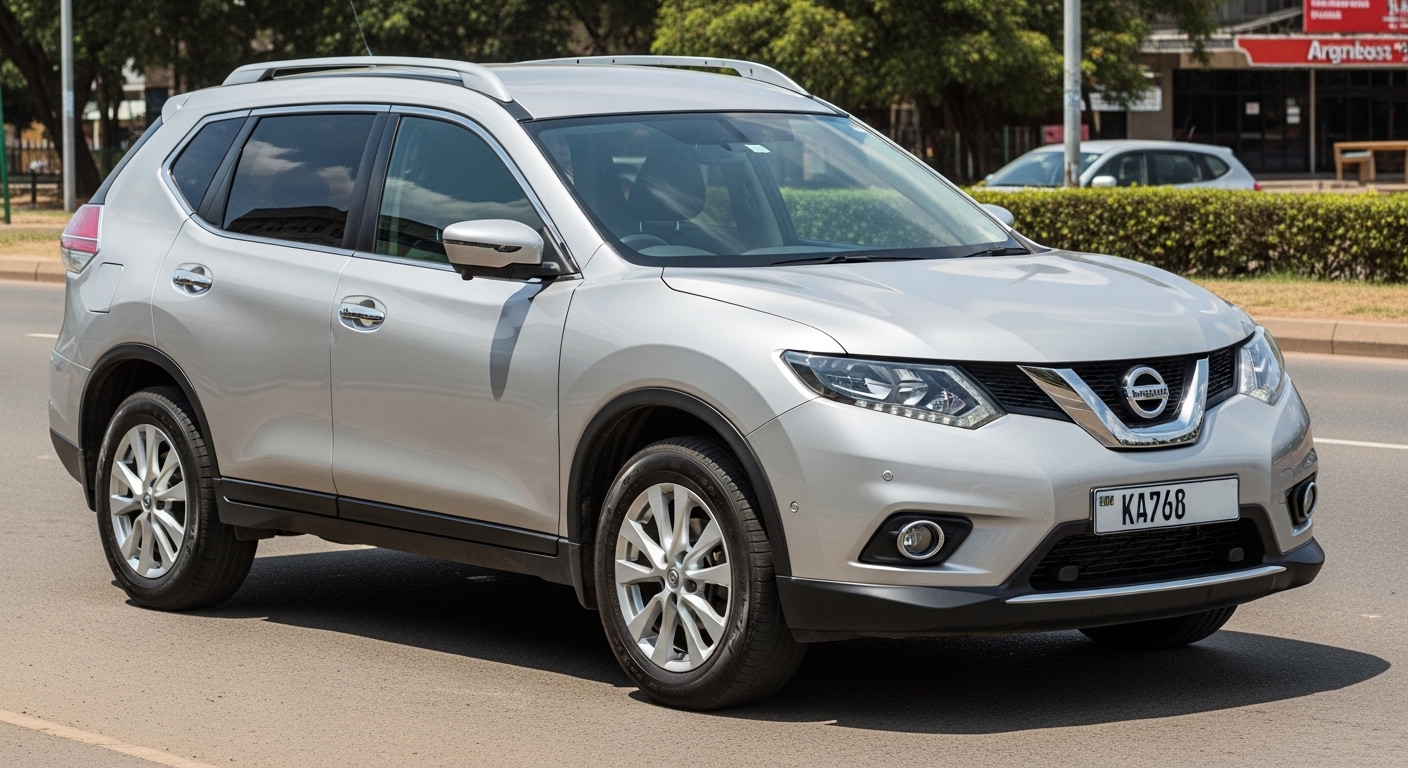 2017 Nissan X-Trail
The larger body changes how the vehicle works on a road trip. The official 2017 three-row 2WD 20X specification lists 4,640mm of length, 1,820mm of width, 1,715mm of height, 205mm of ground clearance, 1,510kg of vehicle weight, 147PS, a 60-litre fuel tank and seven seats (Nissan Japan, “X-Trail T32 grade outline”, 2017).
Nissan lists 16.4 km/L under Japan’s JC08 test for the 20X three-row 2WD petrol grade. The figure is useful for comparing variants, but it is not a promise of loaded highway consumption. A full cabin, roof load, headwind and heavy air-conditioning can all increase fuel use.
Seven seats sound attractive, but the third row creates a practical question: how much luggage remains when all seats are occupied? A family may need soft bags instead of large suitcases. If the third row stays folded, the X-Trail becomes more useful as a family luggage carrier.
The X-Trail is also larger to drive and park. That is a modest cost in town, but a worthwhile trade if you regularly carry five people, a cooler, child equipment or business supplies. A large cabin can reduce fatigue simply because passengers are not competing for shoulder and leg room.
Nissan’s T32 20X three-row 2WD grade is listed at 16.4 km/L under the JC08 test, with 2,000cc displacement and a 60-litre tank. Its seven-seat layout gives families more flexibility, but third-row use reduces the space available for luggage (Nissan Japan, “X-Trail T32 grade outline”, 2017).
[ORIGINAL DATA] For a real buying decision, count the bags you normally carry. A C-HR that comfortably handles two occupants may be cheaper to run than an X-Trail, but it is poor value if every trip requires a roof load or squeezed luggage.
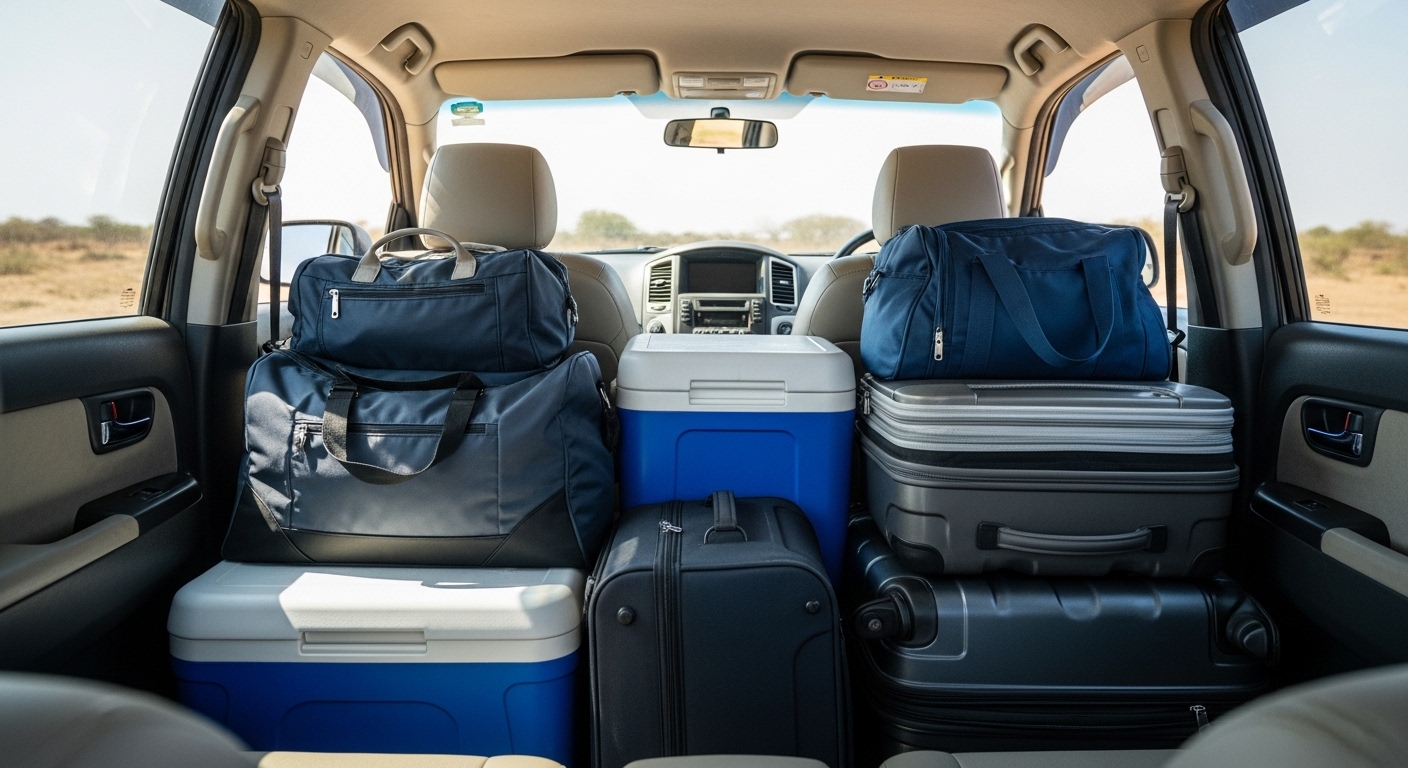 Luggage and coolers packed inside an SUV for a road trip
Which one uses less fuel on long highway drives?
The C-HR hybrid is the fuel-saving choice on the matching official test figures: Toyota lists the 2017 C-HR ZYX10 S at 30.2 km/L JC08, while Nissan lists the 2017 T32 2WD petrol at 16.4 km/L JC08. These are laboratory results, not guarantees of real-world consumption (Toyota Japan, “2017 C-HR S specification”; Nissan Japan, “X-Trail T32 grade outline”, 2017).
The C-HR’s official Japanese figures vary widely. Toyota lists 15.4 to 30.2 km/L JC08 for the historical range covering 2016 to 2018, across petrol and hybrid variants (Toyota Japan, “C-HR fuel information”, 2026). That range is useful context, not a precise result for the 2017 ZYX10 in this comparison.
Illustrative fuel requirement
Use this formula when checking a trip:
Trip fuel required = distance ÷ claimed fuel economy
The table below uses official test figures for the X-Trail and a later ZYX11 C-HR reference. It is not a real-world promise for the supplied 2017 vehicles.
| Trip distance |
C-HR ZYX11 at 25.8 km/L WLTC |
X-Trail T32 hybrid at 20.6 km/L JC08 |
X-Trail T32 petrol at 16.4 km/L JC08 |
| 500km |
19.4 litres |
24.3 litres |
30.5 litres |
| 1,000km |
38.8 litres |
48.5 litres |
61.0 litres |
| 2,000km |
77.5 litres |
97.1 litres |
122.0 litres |
The C-HR figure in this illustration comes from Toyota’s later ZYX11 specification, not the shortlisted 2017 C-HR. The X-Trail figures come from Nissan’s T32 grade list. Test cycles are different, so this is best treated as a planning illustration rather than a scientific head-to-head result.
A larger fuel tank does not automatically mean lower cost. The T32 hybrid reference has a 60-litre tank, while the later ZYX11 C-HR reference has 43 litres. The X-Trail may travel farther between stops, but the C-HR may need fewer litres per kilometre.
Official fuel figures are comparison tools, not road-trip guarantees. Nissan states that weather, traffic, driving style, air-conditioning, maintenance and tyre pressure affect consumption. On Botswana highways, speed, heat, wind and a loaded cabin can widen the gap between test results and actual fuel use.
For another comparison, see the fuel-efficient Japanese cars in Botswana.
What about hybrid economy on the highway?
Hybrid systems often show their clearest advantage in urban driving and traffic. At a steady highway speed, the petrol engine does more of the work. That does not make a hybrid pointless, but it means buyers should not assume the city result will repeat on a long open-road journey.
For regular inter-town travel, compare the total use pattern. A buyer who drives around town during the week and travels on weekends may benefit more from a hybrid than someone who spends nearly every kilometre at high speed.
Is 2WD enough, and which SUV is easier to live with?
2WD is enough for many sealed-road journeys, but neither vehicle suits regular deep sand, mud, flooded tracks or demanding safari routes. In 2026, the cited T32 X-Trail hybrid specification listed 195mm of ground clearance, yet it remained a 2WD vehicle with five seats and a 60-litre tank (Nissan Japan, “X-Trail T32 20X Hybrid specification”, 2017).
| Driving pattern |
Better guidance |
| Mostly sealed roads between towns |
Either 2WD model can fit |
| Gaborone driving plus occasional trips |
C-HR 2WD is easier to manoeuvre |
| Five passengers and regular luggage |
X-Trail 2WD is more practical |
| Patched roads and gravel shoulders |
Check tyres, clearance and underbody condition |
| Regular rough access roads |
Consider the X-Trail carefully, but inspect the exact vehicle |
| Deep sand, mud or flooded tracks |
Neither shortlisted 2WD model |
| Remote routes with uncertain surfaces |
Consider a proper 4WD instead |
The X-Trail’s extra clearance and larger body may make rough edges less stressful. That is not the same as off-road ability. Tyres, traction, speed and driver judgement still matter.
Maintenance also depends on the exact vehicle. Ask a local workshop whether it can diagnose the C-HR hybrid system, service the X-Trail CVT and source parts for the exact model code. Check the auction sheet for repairs, the inspection report for underbody condition and the tyres for age and damage.
The Government of Botswana requires physical inspection for imported vehicles before clearance and issues BP17B for vehicles imported for registration. Used imports from non-SARPCCO countries require an invoice and bill of lading (Government of Botswana, “Vehicle Import/Export Clearance”, 2026).
Ground clearance improves the X-Trail’s tolerance of bumps, but it does not turn a 2WD SUV into a 4WD. The 195mm figure belongs to a specific T32 hybrid grade. Buyers should inspect the exact petrol vehicle instead of transferring that measurement across every X-Trail variant.
A simple workshop checklist helps:
- Can you diagnose this exact hybrid system?
- Can you service this CVT with the correct fluid?
- Can you source suspension and brake parts for this model code?
- Can you inspect hybrid battery health before purchase?
- Can you check the underbody, tyres and cooling system?
Which one offers better value for your driving pattern?
The C-HR offers better value when lower likely fuel use and compact size matter most. The X-Trail offers better value when its extra space prevents cramped travel or repeated compromises. In 2017, the matching T32 petrol specification listed 147PS and a 60-litre tank, while Toyota’s later ZYX11 reference listed 98PS and a 43-litre tank (Toyota Japan, “C-HR G vehicle information”; Nissan Japan, “X-Trail T32 grade outline”, 2017).
| If you… |
Better fit |
| Mostly drive sealed roads with one or two passengers |
Toyota C-HR 2WD hybrid |
| Drive around town and take occasional long trips |
Toyota C-HR |
| Carry five people and luggage regularly |
Nissan X-Trail 2WD |
| Need flexible passenger seating |
Nissan X-Trail, subject to confirmed seven-seat grade |
| Carry coolers, business equipment or bulky bags |
Nissan X-Trail |
| Want the lowest likely fuel use |
Toyota C-HR hybrid, after exact figure verification |
| Regularly drive deep sand or difficult tracks |
Neither, consider a proper 4WD |
Price also needs careful handling. Use current Pula price bands only as planning guides. Do not treat a vehicle price as the full on-road cost. Shipping, customs, clearance, registration, licensing and other local charges may sit separately.
Botswana’s registration guidance says vehicles must be registered before road use, vehicles more than three years old must pass a roadworthiness test, and registration includes a BWP50 levy (Government of Botswana, “Vehicle Registration and Licensing”, 2026). Customs requirements should be checked with the Botswana Unified Revenue Service before committing.
For current requirements, see the Botswana vehicle registration and import rules.
A lower-priced vehicle can become poor value if it has the wrong drivetrain, an unclear auction history, worn tyres or a hybrid system that local workshops cannot support. Condition and suitability should come before the cheapest advertised figure.
How should you compare Japanese-import C-HR and X-Trail vehicles in Botswana?
The safest comparison starts with the exact model code, drivetrain, inspection documents and total local cost rather than the badge alone. In 2026, Botswana’s registration guidance required customs clearance and roadworthiness testing for vehicles more than three years old, while the police clearance service listed a 24 to 48-hour service time after its requirements are met (Government of Botswana, “Vehicle Registration and Licensing”; Government of Botswana, “Vehicle Import/Export Clearance”, 2026).
Start by comparing Toyota C-HR vehicles in Botswana and Nissan X-Trail vehicles in Botswana. Filter carefully for model year, engine, fuel type and drivetrain. A listing that says X-Trail is not necessarily a 2WD petrol or a seven-seat model.
Then check the Toyota C-HR specifications by model year and the Nissan specification database. Confirm the model code, engine capacity, transmission, seat count, fuel tank and drive layout.
Review the Japanese auction sheet and inspection report before payment. Look for the auction grade, odometer information, visible repair marks, tyre condition, underbody condition and any notes about the hybrid system. The correct vehicle documents can matter more than a small difference in advertised price.
BURS states that vehicles imported for home consumption should be cleared within 14 days of entry, with documents including a SAD 500 customs declaration, police clearance certificates, export-country customs documents and an invoice or valuation certificate (Botswana Unified Revenue Service, “Clearance of Motor Vehicles”, 2026). Confirm the latest requirements before shipment.
Botswana’s import process is document-led. Government guidance requires physical inspection, while BURS lists customs and police documents for home-consumption vehicles. Buyers should confirm the invoice, bill of lading, clearance route and registration requirements before choosing between two otherwise suitable SUVs.
The broader Japanese vehicle listings can help you compare alternatives if neither model fits your passenger or road requirements. The Botswana FAQ also explains that listed pricing includes the vehicle and shipping, while duty, tax and customs clearance are separate. Current charges should be confirmed with the relevant authorities.
[PERSONAL EXPERIENCE] A useful import check is to compare the auction sheet with the inspection report line by line. The auction grade may tell you the overall assessment, while the inspection report can add practical detail about tyres, panels, interior wear and equipment.
Carbarn provides online browsing of Japanese vehicles, model and specification information, vehicle and shipping pricing, RoRo shipping from Japan to Durban followed by road transport to Botswana, vehicle-selection and import guidance, and payment by card, PayPal or telegraphic bank transfer. Its Botswana FAQ states that duty, tax and customs clearance are separate, vehicles do not include a manufacturer warranty, and delivery estimates can change.
Final verdict: Toyota C-HR or Nissan X-Trail?
For a couple or small household travelling mainly on sealed roads, the Toyota C-HR 2WD hybrid is probably the better fit. For a family carrying passengers and luggage, the Nissan X-Trail 2WD makes more sense. Nissan’s official T32 figures show 16.4 km/L for the listed 2WD petrol grade, but the final decision still depends on load, route and condition (Nissan Japan, “X-Trail T32 grade outline”, 2017).
Choose the C-HR if you want:
- Lower likely fuel use.
- Easier parking and urban manoeuvrability.
- Five seats for a couple or small family.
- A compact hybrid for mixed city and highway driving.
Choose the X-Trail if you want:
- More cabin space.
- Seven seats in a confirmed three-row grade.
- Better luggage flexibility.
- A more relaxed family-tourer layout.
Choose neither if your real route includes deep sand, mud, flooded tracks or difficult safari roads. In that case, a proper 4WD is the more appropriate tool.
Before deciding, compare the exact model code, auction sheet, inspection report, drivetrain and local costs. The right SUV is the one that fits your actual passengers, luggage and roads.
Sources and publication note
Specifications were checked against manufacturer pages, while inventory, shipping and service information was checked against Carbarn Botswana pages on 13 August 2026. Fuel figures are official Japanese test-cycle results and are not guarantees of real-world consumption. Prices, procedures and availability can change.
- Toyota Japan, “C-HR G vehicle information”, retrieved 2026-08-13, https://toyota.jp/ucar/catalog/brand-TOYOTA/car-CHR/202208/10144901/
- Toyota Japan, “C-HR fuel information”, retrieved 2026-08-13, https://toyota.jp/ucar/catalog/brand-TOYOTA/car-CHR/nenpi/
- Toyota Japan, “2017 C-HR S specification”, retrieved 2026-08-13, https://toyota.jp/ucar/catalog/brand-TOYOTA/car-CHR/201708/10111065/
- Nissan Japan, “X-Trail T32 grade outline”, retrieved 2026-08-13, https://history.nissan.co.jp/X-TRAIL/T32/1312/grade_outline.html
- Nissan Japan, “X-Trail T32 20X Hybrid specification”, retrieved 2026-08-13, https://history.nissan.co.jp/X-TRAIL/T32/1312/t321312g19.html?gradeID=G19&model=X-TRAIL
- Government of Botswana, “Vehicle Import/Export Clearance”, retrieved 2026-08-13, https://www.gov.bw/policing/vehicle-importexport-clearance?page=0
- Government of Botswana, “Vehicle Registration and Licensing”, retrieved 2026-08-13, https://www.gov.bw/transport/vehicle-registration-and-licensing
- Botswana Unified Revenue Service, “Clearance of Motor Vehicles”, retrieved 2026-08-13, https://www.burs.org.bw/index.php/customsexcisemain/customs-clearance/clearance-of-motor-vehicles
- GOV.UK, “Botswana: Safety and security”, retrieved 2026-08-13, https://www.gov.uk/foreign-travel-advice/botswana/safety-and-security
- Botswana specification database, “Nissan Xtrail 20XI Hybrid HT32”, retrieved 2026-08-13, https://www.carbarn.co.bw/car-specifications/nissan/xtrail/7291