


Fuel can become one of the biggest costs of daily driving in Lusaka. Stop-start traffic, short trips and long queues at busy times all make a petrol car work harder.
A hybrid can reduce fuel use, but the lowest purchase price does not always produce the lowest ownership cost. You also need to consider battery evidence, service support, ground clearance, cabin space, engine size and separate import charges.
This 2026 shortlist compares five Japanese hybrids for different Zambian buyers. It uses ZMW planning bands, official Japanese fuel figures and vehicle-specific stock information. Prices move with auction results, exchange rates, mileage, auction grade and condition.
Quick Answer
- The Toyota Aqua is the strongest first comparison for many Lusaka commuters.
- The Honda Fit Hybrid offers more flexible cabin space.
- The Nissan Note e-POWER gives electric-motor-led driving without external charging.
- The Toyota Prius suits buyers who want more space and longer-distance comfort.
- In 2025, Toyota Japan listed 33.6 km/L WLTC for one selected current Aqua configuration, but this is not guaranteed real-world consumption (Toyota Aqua specifications, 2025).
Are Japanese hybrid cars a good choice for Zambia?
In 2026, Nissan Japan lists 28.4 km/L WLTC for a specified two-wheel-drive Note E13 configuration. Japanese hybrids can suit Zambia, especially when most driving happens in traffic, but road conditions, air-conditioning, load and maintenance still affect actual fuel use.
A self-charging hybrid combines a petrol engine, electric motor and battery. It recovers some energy while slowing down, then uses that stored energy during low-speed acceleration. You do not need a home charger or public charging station for normal driving.
That makes hybrids useful in Lusaka traffic. Repeated stopping gives the system more chances to recover energy. The petrol engine can also switch off during some low-speed conditions, depending on the model and battery state.
The advantage may shrink on fast inter-town journeys. Heavy luggage, four or five passengers, strong headwinds and frequent air-conditioning use all increase fuel consumption. Tyre pressure matters too. A small hatchback may also feel less comfortable when fully loaded.
WLTC is the newer Japanese test cycle. It combines city, suburban and motorway conditions. JC08 appears on many older Japanese vehicles, but it is a different test. You should never compare a JC08 figure directly with a WLTC figure as if both tests were identical.
Official figures remain useful for comparing similar variants. They are not promises about Lusaka driving. Traffic, weather, road surface, driving style and vehicle condition all matter.
The best hybrid for Zambia is not automatically the one with the highest laboratory figure. A slightly less efficient car with better cabin space, clearer inspection evidence and easier servicing may cost less over several years.
A self-charging hybrid can reduce fuel use in stop-start driving without requiring external charging. Official figures help compare models, but Nissan’s 2026 Note specification warns that weather, traffic, air-conditioning and driving style change the result. (Nissan Note environmental specifications, 2026).
Which affordable hybrids should Zambian buyers compare first?
In 2025, Toyota’s selected Aqua configuration recorded 33.6 km/L WLTC, while Honda’s selected current Fit e:HEV configuration recorded 29.0 km/L WLTC. The practical shortlist therefore needs city efficiency, cabin space, service support and road usability, not fuel economy alone.
| Model | Best suited to | Main strength | Main caution | Planning price position |
|---|---|---|---|---|
| Toyota Aqua | Lusaka commuters and ride-hailing drivers | Compact size and fuel-saving focus | Smaller cabin and lower-road usability | Older examples may sit under K150,000 |
| Honda Fit Hybrid | Small families and flexible daily use | Versatile cabin and cargo layout | Confirm the exact hybrid generation | Older examples may sit around K100,000 to K160,000 |
| Nissan Note e-POWER | Urban drivers wanting smooth response | Electric-motor-led driving feel | Confirm e-POWER status and technical support | Often worth comparing around K100,000 to K160,000 |
| Toyota Prius | Longer trips and greater cabin space | Established hybrid format | Older examples need close inspection | Usually above the smallest hatchbacks |
| Toyota Corolla Fielder Hybrid | Families carrying luggage | Wagon practicality | Confirm variant and current feed evidence | May sit around or above K200,000 |
These are planning bands, not exact vehicle prices. They are also not final landed or on-road totals. Customs duties, local registration fees and port-clearance charges remain separate responsibilities.
A buyer comparing a Toyota Aqua price in Zambia should therefore compare year, odometer, grade, body condition and estimated landed cost together. A cheaper older car can need more work before it becomes a sensible daily driver.
The Honda Fit and Nissan Note deserve extra attention because their category pages contain both hybrid and petrol variants. The model name alone does not confirm the powertrain.
Affordability should be judged across five areas: purchase band, likely fuel use, practical space, service access and condition evidence. That framework gives you a better answer than a simple top-10 list.
The most useful affordable hybrid shortlist combines a compact city hatchback, a flexible family hatchback, an electric-motor-led alternative, a larger liftback and a practical wagon. Current Japanese figures range from 28.4 km/L WLTC for the specified Note E13 to 33.6 km/L for the selected Aqua configuration, but these are not directly applicable to every older imported vehicle.
Which hybrid model fits your driving pattern?
In 2026, the official Honda Fit sheet lists 29.0 km/L WLTC for a selected current e:HEV configuration, while older GP5 vehicles use a different system and test context. The model that suits you depends on passengers, route, road surface, luggage and the exact vehicle documents.
The Toyota Aqua is the strongest city-first comparison
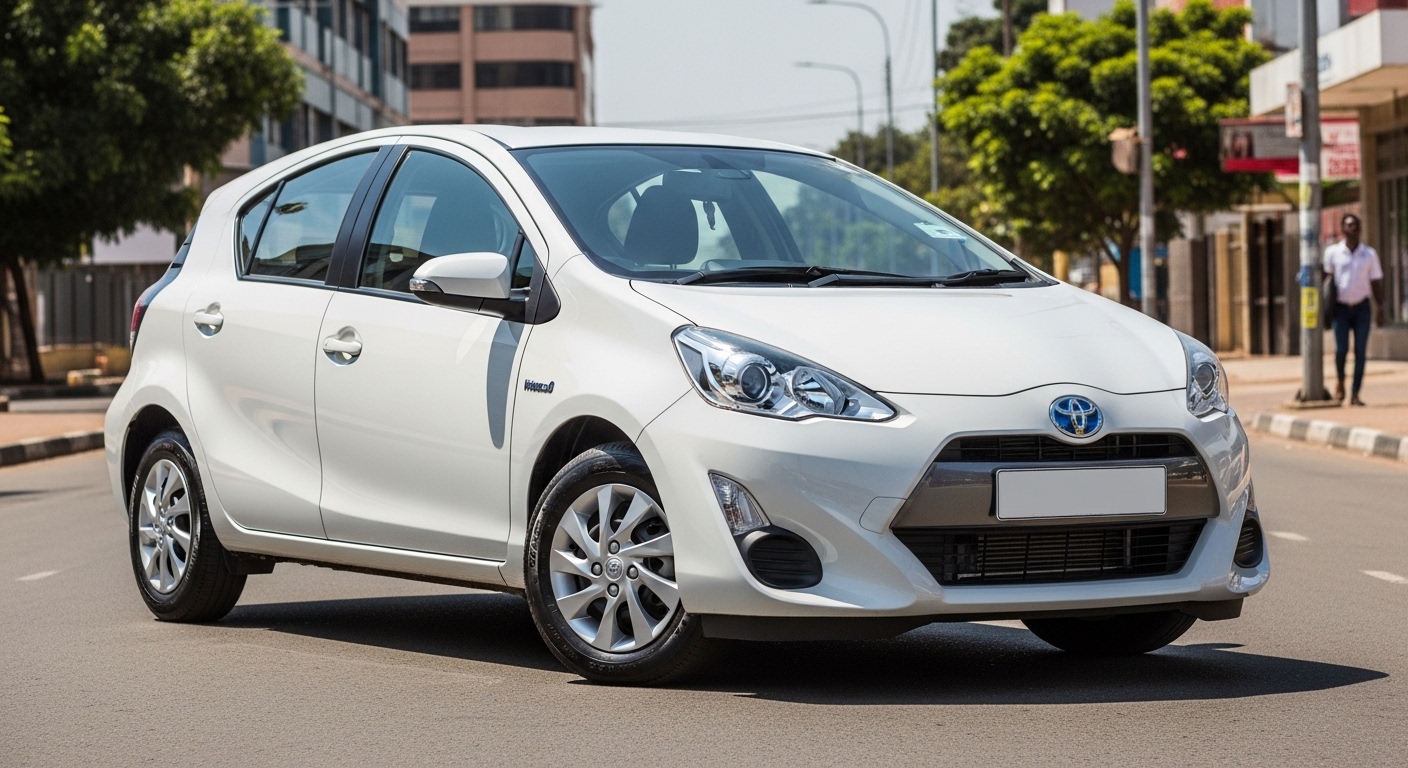
The Toyota Aqua is probably the strongest first comparison for a buyer who spends most of the week in Lusaka traffic. Its compact hatchback body is easy to place in crowded roads and parking areas. It also suits commuters and drivers who value a fuel-saving focus over maximum cabin space.
The selected 2017 Toyota Aqua S has a 1,500 cc hybrid powertrain, automatic transmission, two-wheel drive, 30,000 km and auction grade 3.5. The vehicle page does not provide a model code, so you should request the full specification before relying on a generation-specific fuel figure.
 2017 Toyota Aqua
The Aqua’s main compromise is size. Rear-seat room and boot space are more limited than in the Prius or Corolla Fielder. Its urban-focused road suitability also means you should take care around steep speed humps, potholes and rough compounds.
The current Toyota sheet lists 33.6 km/L WLTC for one selected Aqua configuration, with separate city, suburban and motorway figures. That result belongs to the named current configuration, not automatically to the 2017 example. For more detail, read the Toyota Aqua price and hybrid buying guide and Toyota specifications.
The Aqua is a compact, fuel-focused option with confirmed Japan-stock examples and strong urban appeal. Toyota’s selected current configuration records 33.6 km/L WLTC, but buyers should match any fuel figure to the exact year, model code, grade and drivetrain before comparing it with older stock. (Toyota Aqua specifications, 2025).
The Honda Fit Hybrid suits buyers who need flexibility
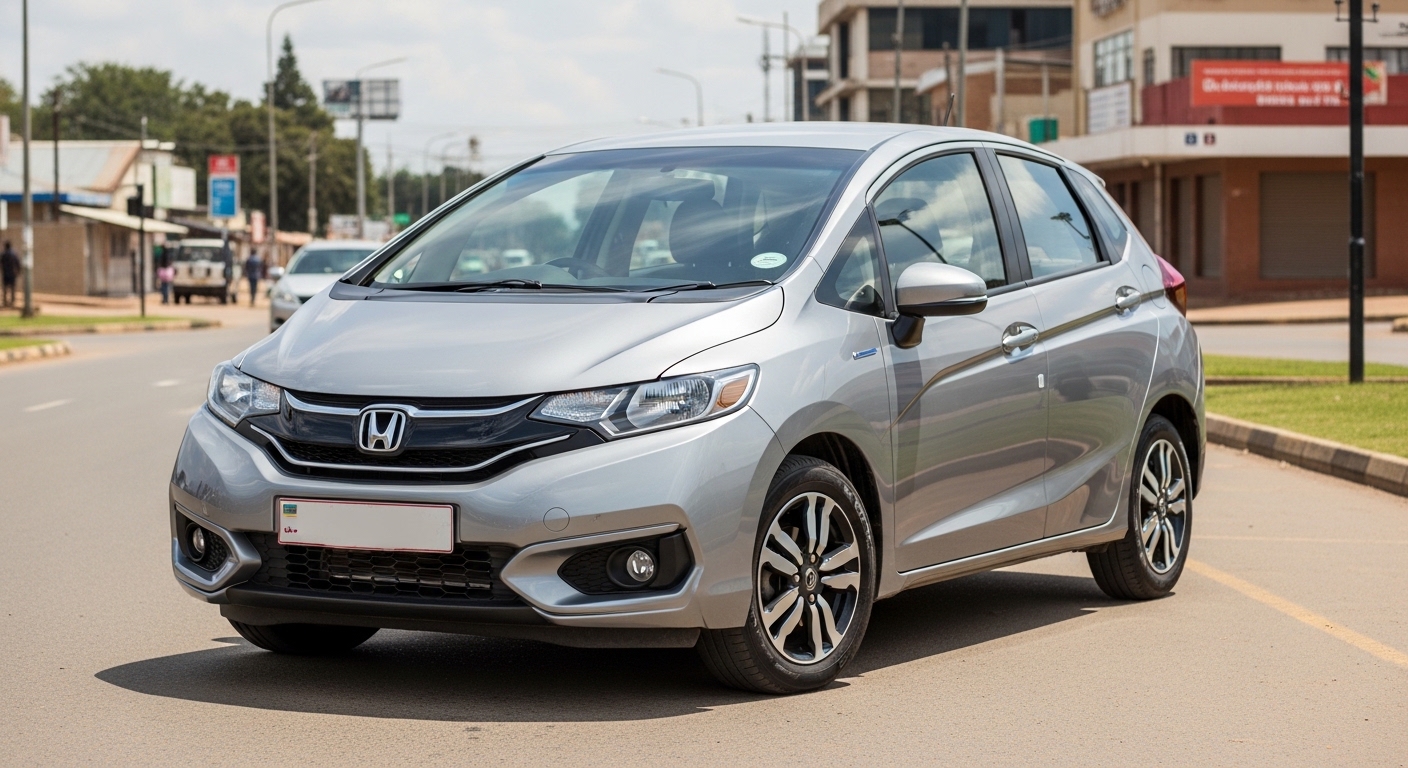
The Honda Fit is the better fit for buyers who need a more flexible cabin. Its compact exterior remains useful around Lusaka, while its interior layout can handle small-family duties and occasional bulky cargo more easily than the Aqua.
The selected 2018 Honda Fit Hybrid S Honda Sensing uses the GP5 model code and a 1,500 cc hybrid engine. It has automatic transmission, front-wheel drive, 109,000 km and auction grade 3.5. The vehicle page lists the LEB engine code, 110 power and a five-door hatchback layout.
 2018 Honda Fit
The important question is not simply whether a Fit is hybrid. It is which hybrid system and model code the vehicle uses. Older GP5 examples are different from newer e:HEV cars. Transmission behaviour, warning lights, auction comments and diagnostic evidence deserve careful review.
In 2013, Honda listed 36.4 km/L under the JC08 test cycle for a relevant Fit Hybrid FF configuration. That figure should not be compared directly with the newer 29.0 km/L WLTC figure, and it should not be presented as guaranteed consumption for this 2018 example. Check the Honda specifications reference before choosing.
The Honda Fit offers more cabin flexibility than many compact hatchbacks, but buyers must distinguish older GP5 hybrids from newer e:HEV models. Honda’s 2013 GP5 specification recorded 36.4 km/L JC08 for a relevant FF configuration, while current Fit figures use WLTC. (Honda Fit 2013 specifications, 2013).
The Nissan Note e-POWER adds a different driving feel
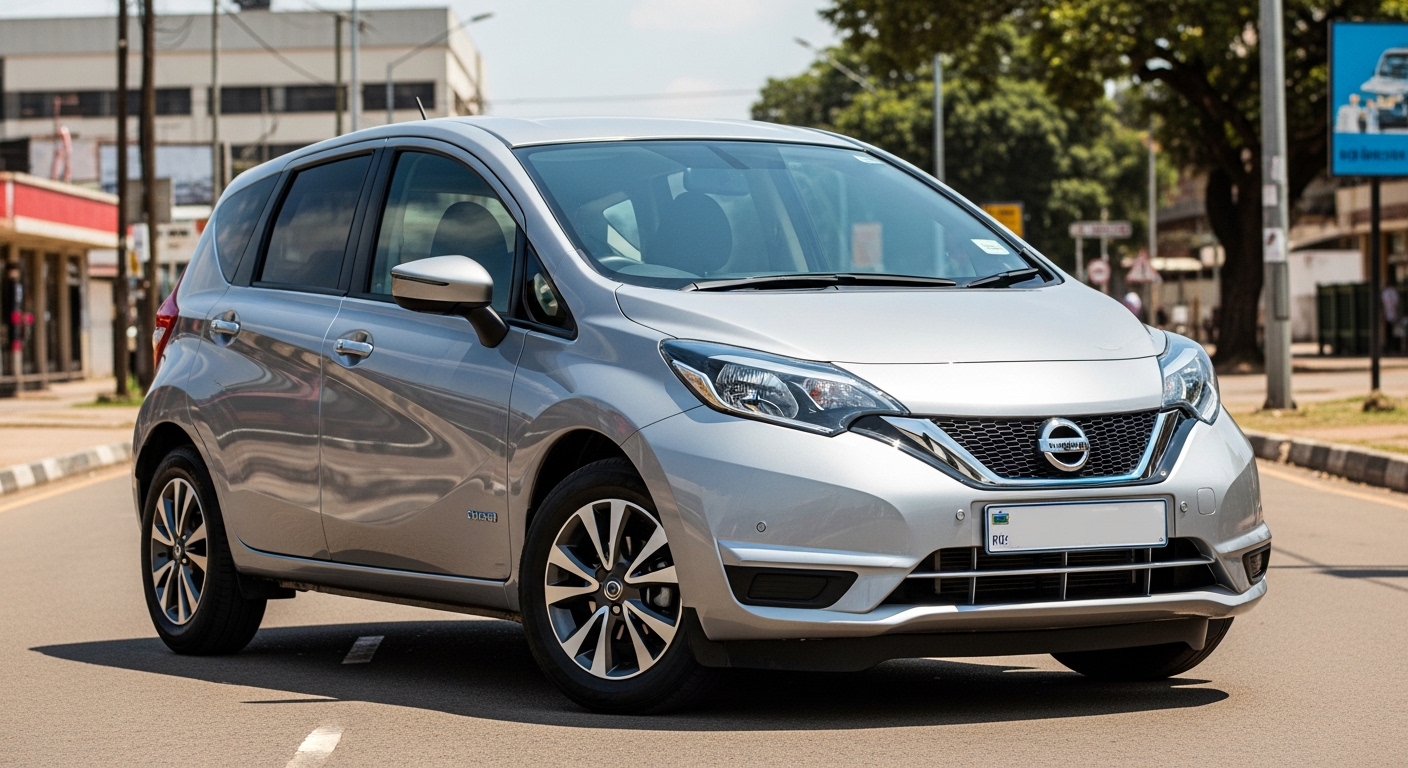
The Nissan Note is worth considering if you want smooth electric-motor response without choosing a fully electric vehicle. In an e-POWER system, the petrol engine generates electricity while the electric motor drives the wheels.
The selected 2017 Nissan Note e-POWER X Mode Premier uses the HE12 model code and a 1,200 cc hybrid powertrain. It has automatic transmission, front-wheel drive, 102,000 km and auction grade 3.5. The vehicle page lists the HR12DE engine code and a five-door hatchback body.
 2017 Nissan Note
That layout gives the Note a smooth, direct response in traffic. It also avoids the need for external charging under normal use. The trade-off is that e-POWER is not the same system as Toyota’s conventional hybrid arrangement or Honda’s older GP5 setup.
Nissan’s current E13 Note environmental specification lists 28.4 km/L WLTC for a specified 2WD configuration. The 2017 HE12 vehicle is a different generation, so that number provides context rather than a direct promise. Confirm the exact grade, system condition and available technical support before choosing it.
The Note e-POWER uses a petrol engine to generate electricity while an electric motor propels the vehicle. Nissan lists 28.4 km/L WLTC for a specified current E13 2WD configuration, but a 2017 HE12 example requires its own model-specific checks. (Nissan Note environmental specifications, 2026).
The Toyota Prius makes more sense for space and longer trips
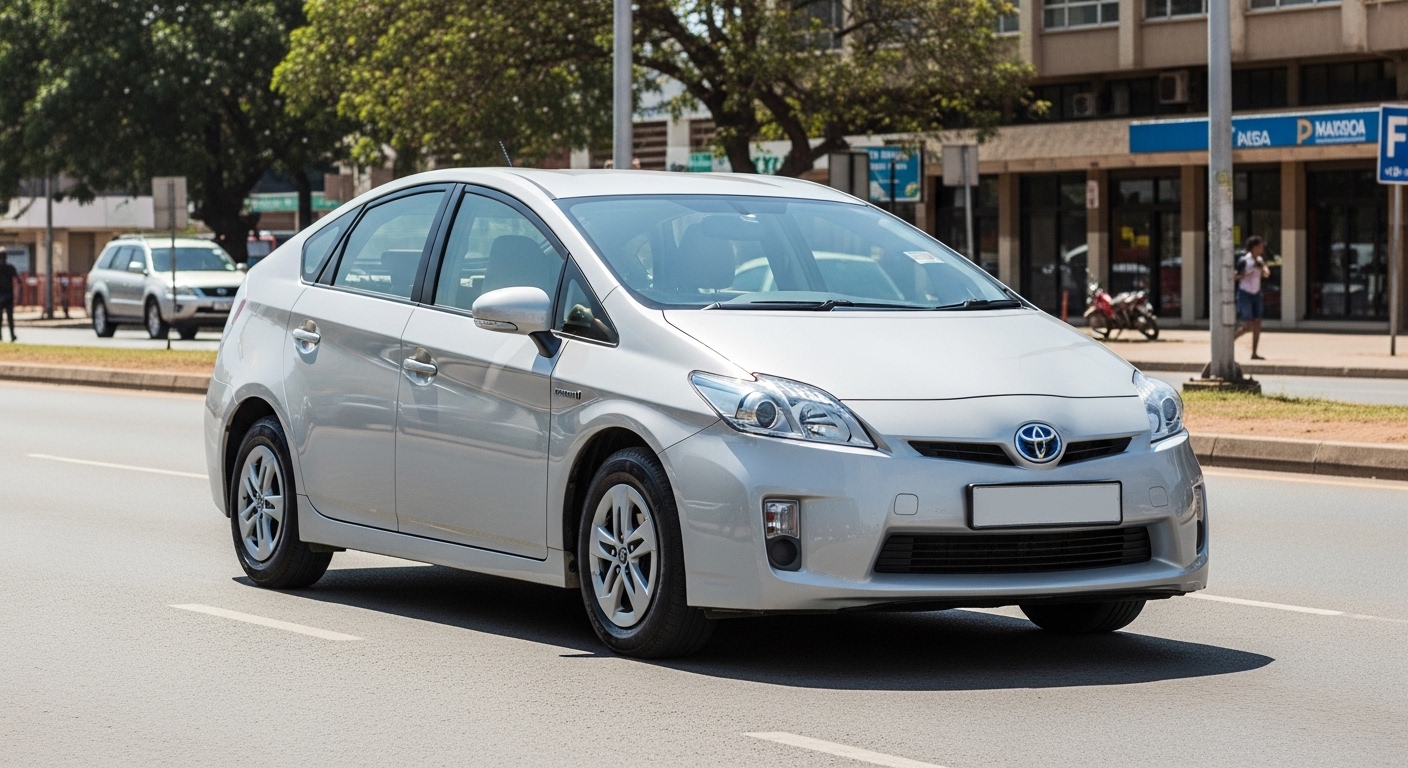
The Toyota Prius makes more sense when cabin space, longer-distance comfort and a mature hybrid format matter more than the lowest entry price. It is a stronger fit for regular inter-town journeys than a small city hatchback.
The selected 2012 Toyota Prius S uses the ZVW30 model code and 2ZR-FXE engine. It has an 1,800 cc hybrid powertrain, automatic transmission, front-wheel drive, 109,000 km and auction grade 4. The liftback body gives it more useful luggage space than the Aqua.
 2012 Toyota Prius
Age changes the buying decision. A low-priced Prius may need closer checks of the hybrid system, suspension, air-conditioning, underbody and electronic components. Larger engine capacity can also affect import-cost calculations, so do not compare its purchase band with a 1,200 cc Note alone.
Toyota’s current 1.8-litre Prius specification lists 32.6 km/L WLTC for a selected configuration. That figure does not describe every older ZVW30 vehicle. A buyer who wants the lowest possible entry price may prefer the Aqua, while a buyer carrying passengers and luggage may find the Prius easier to live with.
The Prius offers more cabin and luggage space than the Aqua, but older examples need closer inspection. Toyota’s current 1.8-litre Prius specification lists 32.6 km/L WLTC for a selected configuration, while the chosen 2012 ZVW30 has its own age, condition and documentation considerations. (Toyota Prius specifications, retrieved 2026-08-15).
The Toyota Corolla Fielder Hybrid is the practical wagon choice
The Toyota Corolla Fielder Hybrid is the strongest option here for buyers who carry luggage, shopping or family equipment regularly. Its wagon body offers more useful cargo space than the Aqua, Fit or Note.
The selected 2014 vehicle is identified as a FIELDER HV variant with the NKE165G model code. It uses a 1,500 cc hybrid powertrain, automatic transmission, front-wheel drive, 107,000 km and auction grade 4. The vehicle page lists the 1NZ-FXE engine code and a five-seat wagon layout.
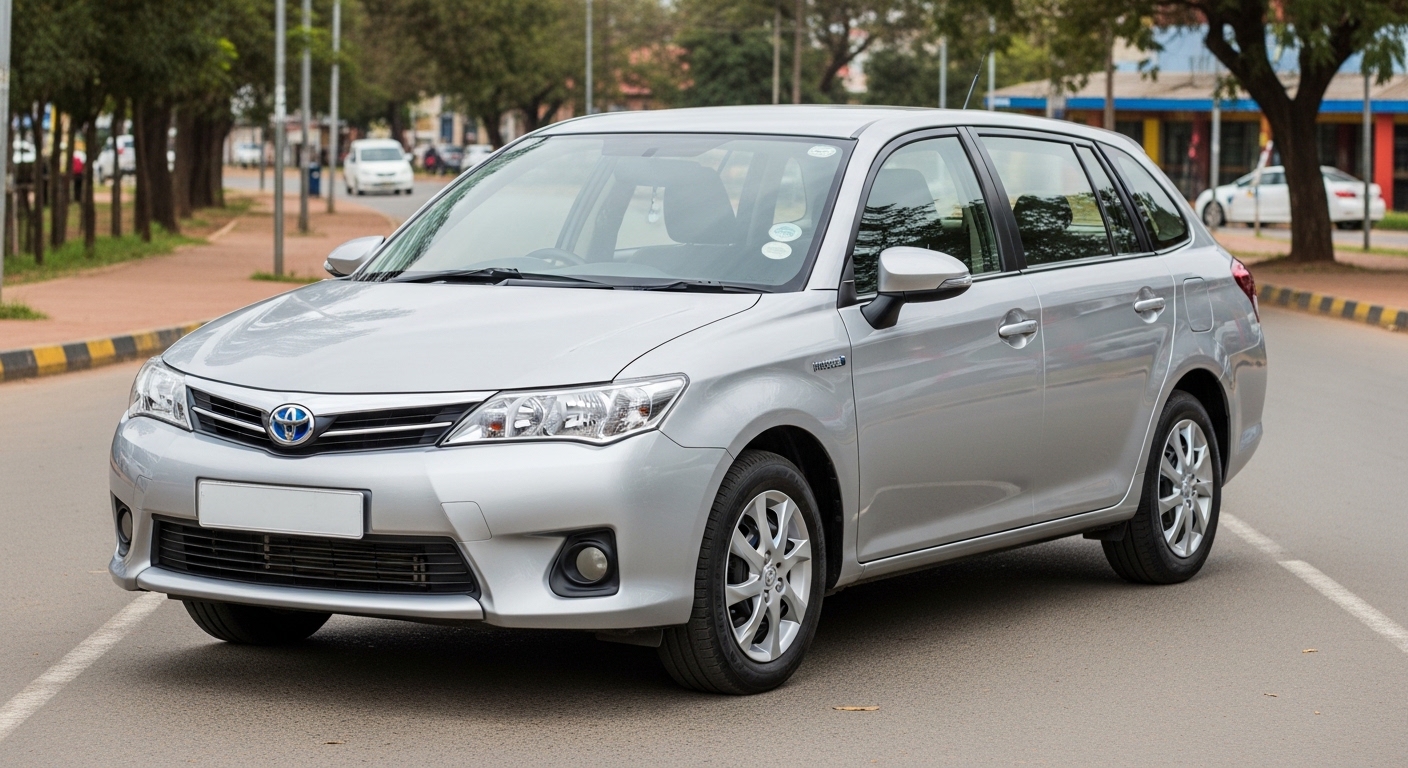 2014 Toyota Corolla Fielder
The Fielder makes sense for families, sales workers and drivers who travel with luggage between towns. It is not automatically the cheapest option, however. Confirm the exact hybrid variant, inspect the underbody and suspension, and compare its price band with the practical value of the extra cargo space.
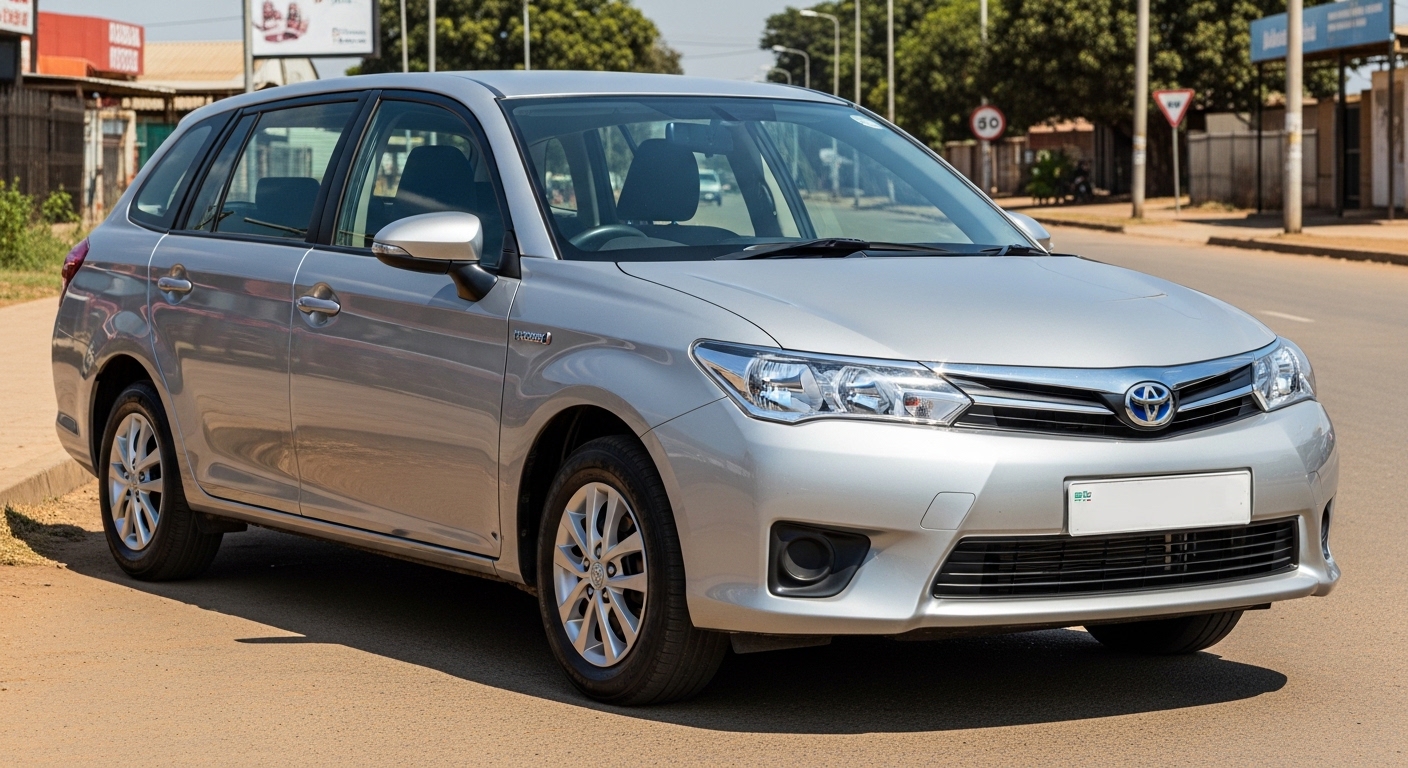 2014 Toyota Corolla Fielder
Do not assume every Corolla Fielder is hybrid. The model code, fuel label, auction sheet and inspection report must agree. The selected page is useful because it identifies the FIELDER HV variant, but current category availability and the final quotation should still be checked before purchase.
The Fielder is the most practical family option in this shortlist because its wagon body prioritises cargo space. The selected vehicle is a 1,500 cc NKE165G hybrid with 107,000 km and auction grade 4, but buyers should confirm the exact variant and supporting documents before relying on its specifications.
Which hybrid is best for your budget and driving pattern?
In 2026, the selected current Aqua, Fit, Note and Prius specifications show official WLTC results from 28.4 km/L to 33.6 km/L. The right choice depends on how often you drive in Lusaka, how many people you carry and whether longer trips matter more than the lowest entry band.
| Buyer profile | First model to compare | Why it may fit | Main caution |
|---|---|---|---|
| Lusaka commuter | Toyota Aqua | Compact and focused on urban economy | Smaller cabin and road clearance |
| Ride-hailing driver | Aqua or Fit Hybrid | Manageable size and fuel-saving focus | Inspect older examples carefully |
| Small family | Honda Fit Hybrid | Flexible seating and cargo space | Confirm the exact hybrid generation |
| Electric-style driving preference | Nissan Note e-POWER | Electric motor drives the wheels | Confirm technical support |
| Frequent inter-town driver | Toyota Prius | More space and mature hybrid format | Older cars need detailed inspection |
| Family carrying luggage | Corolla Fielder Hybrid | Wagon practicality | Validate the hybrid variant |
| Tightest purchase budget | Older Aqua, Fit or Note | More likely to enter lower bands | Age may increase repair risk |
| Familiar Toyota hybrid preference | Aqua or Prius | Commonly understood system layout | Familiarity does not replace checks |
The oldest car is not automatically the cheapest to own. Add customs, registration, clearance, tyres, servicing and possible repairs to your planning. A newer example with clearer documentation may be better value than an older car with an attractive entry band.
Road use matters too. A low hatchback can work well on paved Lusaka routes but feel less suitable on rough compounds or tall speed humps. A Prius gives more space, yet it still needs care on poor surfaces. A wagon gives useful luggage room, but its larger body may not suit every urban driver.
If you drive mostly in town, prioritise urban efficiency and easy manoeuvring. If you carry passengers and luggage across longer routes, a slightly larger hybrid may save more stress even when its official fuel figure looks less impressive.
The Aqua is the strongest first comparison for city-focused buyers. The Fit is better when flexible space matters, the Note suits buyers who value electric-motor response, the Prius favours longer trips and the Fielder is strongest for luggage. No single fuel figure decides every buying case.
What should you check before importing a used Japanese hybrid?
The published buying process estimates about 6 to 10 weeks from purchase confirmation to delivery in Zambia. Before that clock starts, confirm the exact vehicle, documents, hybrid system and separate local charges rather than choosing from a model name alone.
Vehicle and document checklist
- Confirm whether the vehicle is petrol, conventional hybrid or e-POWER.
- Check the engine size in cc.
- Confirm the model code and generation.
- Review the official Japanese auction sheet.
- Understand the auction grade and condition comments.
- Review the in-house inspection report.
- Compare odometer readings across every document.
- Ask what battery-condition evidence is available.
- Check dashboard photographs for warning lights.
- Review underbody, suspension, tyres and air-conditioning condition.
- Confirm right-hand-drive eligibility.
- Request a current ZMW pro forma invoice.
- Separate the vehicle and shipping price from customs, registration and clearance charges.
- Confirm the shipping route and delivery estimate.
An auction grade is a useful starting point, not a full mechanical diagnosis. A grade 4 car can still have wear items or cosmetic defects. The condition notes matter because they show what the headline grade does not explain.
Battery evidence also needs careful wording. Ask whether diagnostic information, warning-light checks or inspection comments are available. Do not assume a battery will last for a fixed number of years or kilometres.
Zambia permits right-hand-drive vehicles, and the import-rules page states that there is no import age limit. That can widen the choice for budget buyers, but older cars still need stronger checks for condition, parts access and resale demand.
The standard route is Japan to Dar es Salaam by RoRo, followed by overland transport into Zambia. Durban may be an alternative route in some cases. Customs duties depend on engine capacity, vehicle age, Japanese Yellow Book valuation and current regulations. No fixed tax percentage should be assumed.
The import process requires more than a vehicle choice. Reports, model code, engine size, RHD eligibility, JEVIC certification, shipping documents and local clearance responsibilities should all be confirmed before payment. The published estimate of 6 to 10 weeks is a planning guide, not a guaranteed delivery promise. (How to Buy, retrieved 2026-08-15).
How can you keep hybrid ownership affordable in Zambia?
In 2026, Nissan’s official Note specification shows 28.4 km/L WLTC for a specified current configuration, but maintaining the system correctly matters more than chasing a laboratory number. Proper tyres, cooling, diagnostics and model-specific servicing help protect the fuel-saving benefit.
Follow the maintenance schedule for the exact model and generation. A GP5 Fit, HE12 Note and ZVW30 Prius do not use identical hybrid systems, even though all appear under a broad hybrid label.
Use a technician who understands the system fitted to your vehicle. Do not ignore warning lights, unusual engine behaviour or changes in hybrid operation. Early diagnosis may give you more choices than waiting for a larger fault.
Keep tyres correctly inflated and inspect ordinary wear items. Brakes, suspension, air-conditioning, the cooling system and the 12-volt battery still matter on a hybrid. Regenerative braking does not remove every maintenance need.
Keep records of servicing and replacement parts. Those records can help with future troubleshooting and resale. They also make it easier to explain what has been checked if you sell the vehicle later.
A sensible ownership budget compares two vehicles, not just two purchase bands. A cheaper older hybrid may need tyres, suspension work or deeper diagnostics, while a better-documented example may cost more at the start but require fewer immediate decisions.
Hybrid ownership becomes more affordable when the buyer checks the exact system, keeps routine maintenance current and budgets for ordinary wear. The 28.4 km/L Note E13 figure is a manufacturer test result, not a substitute for inspection, correct tyres, air-conditioning care and suitable technical support. (Nissan Note environmental specifications, retrieved 2026-08-15).
How can a remote Japan-to-Zambia buying process reduce uncertainty?
A remote import process can reduce uncertainty when buyers receive two condition reports before payment and can follow the shipment through documented stages. The key is to verify what the quoted price covers, what remains separate and where the vehicle is located.
The listed vehicles are Japan-based stock, not cars waiting in a Zambian yard. Buyers should expect a remote purchase process, document review and shipping rather than a local test drive.
The published process includes an official Japanese auction sheet and an in-house inspection report before payment. It also includes JEVIC pre-shipment certification, which is required before export for Zambia.
The standard shipping route is RoRo from Japan to Dar es Salaam, followed by overland transport into Zambia. Durban may be used as an alternative route where appropriate. The dashboard provides access to invoices, inspection reports, certificates, the bill of lading and vessel-tracking information.
A 15 August 2026 catalogue snapshot recorded 41 Toyota Aqua pages, five Honda Fit pages, 15 Nissan Note pages and 32 Toyota Prius pages. Those figures can change, so treat them as a dated reference rather than permanent availability. The Fielder example is listed separately and should be validated through its vehicle page.
The vehicle and shipping price is not automatically the final on-road total. Customs duties, local registration fees and port-clearance charges remain separate. Payment follows the official upfront process, and imported vehicles do not include a manufacturer warranty or financing arrangement.
For a remote, Japan-based buying process with Carbarn, every listed vehicle is owned by Carbarn Zambia, buyers receive the auction sheet and in-house inspection report before payment, JEVIC certification is completed before export, RoRo shipping goes to Dar es Salaam or an alternative Durban route, and the dashboard provides invoices, certificates, the bill of lading and vessel tracking; the process runs from Japan without a Zambian showroom or test-drive facility, uses upfront payment, excludes separate customs, registration and clearance charges, includes no manufacturer warranty, and estimates delivery at about 6 to 10 weeks.