Choosing between an SUV and a sedan often starts with potholes. If you are searching for the best car for Zambian roads, an SUV is not automatically the answer. Sedans suit mostly paved Lusaka use, while higher-clearance vehicles earn their cost when rough roads are regular. The right choice depends on the roads travelled each week.
Zambia has paved urban streets, major highways, gravel routes and rural access roads. Older road-network figures can provide context, but they are not a complete measurement of Zambia in 2026. What matters for a buyer is the condition of the routes driven each week, especially after heavy rain and roadworks.
This guide compares clearance, fuel use, tyres, suspension, passenger space and city comfort. For more detail on eligibility and landed-cost responsibilities, see Zambia’s import rules and regulations.
Quick Answer
- An SUV usually gives you more clearance for potholes, gravel and uneven access roads.
- A sedan or hatchback often suits mostly paved Lusaka driving; running costs depend on the exact model and route.
- Toyota’s Corolla Axio hybrid is listed at 155 mm of clearance, while a specified Nissan Kicks X FOUR is listed at 170 mm.
- A compact crossover can be a useful middle ground, but it is not automatically a serious off-road vehicle.
- Choose according to the roads you drive every week, not the body style that looks toughest.
Is an SUV Automatically Better for Zambian Roads?
No. An SUV can be the stronger fit when rough roads are part of your normal routine, while a sedan may be more sensible for paved urban driving. The exact vehicle, tyres and road condition still matter. Major routes still need maintenance, and conditions can change after roadworks, heavy rain and continued traffic.
Higher ground clearance can give an SUV more margin over pothole edges, drainage channels, steep speed humps and uneven gravel. It may reduce the chance of scraping the underside, but wheelbase, approach angle, tyres, load, speed and suspension condition also matter. That extra margin can help when you travel outside Lusaka regularly.
However, clearance is not the same as off-road ability. Some compact crossovers use two-wheel drive and are designed mainly for paved roads, while other variants have four-wheel drive. A Nissan Kicks or Toyota C-HR may offer a higher driving position, but check the exact variant before judging its rough-road ability.
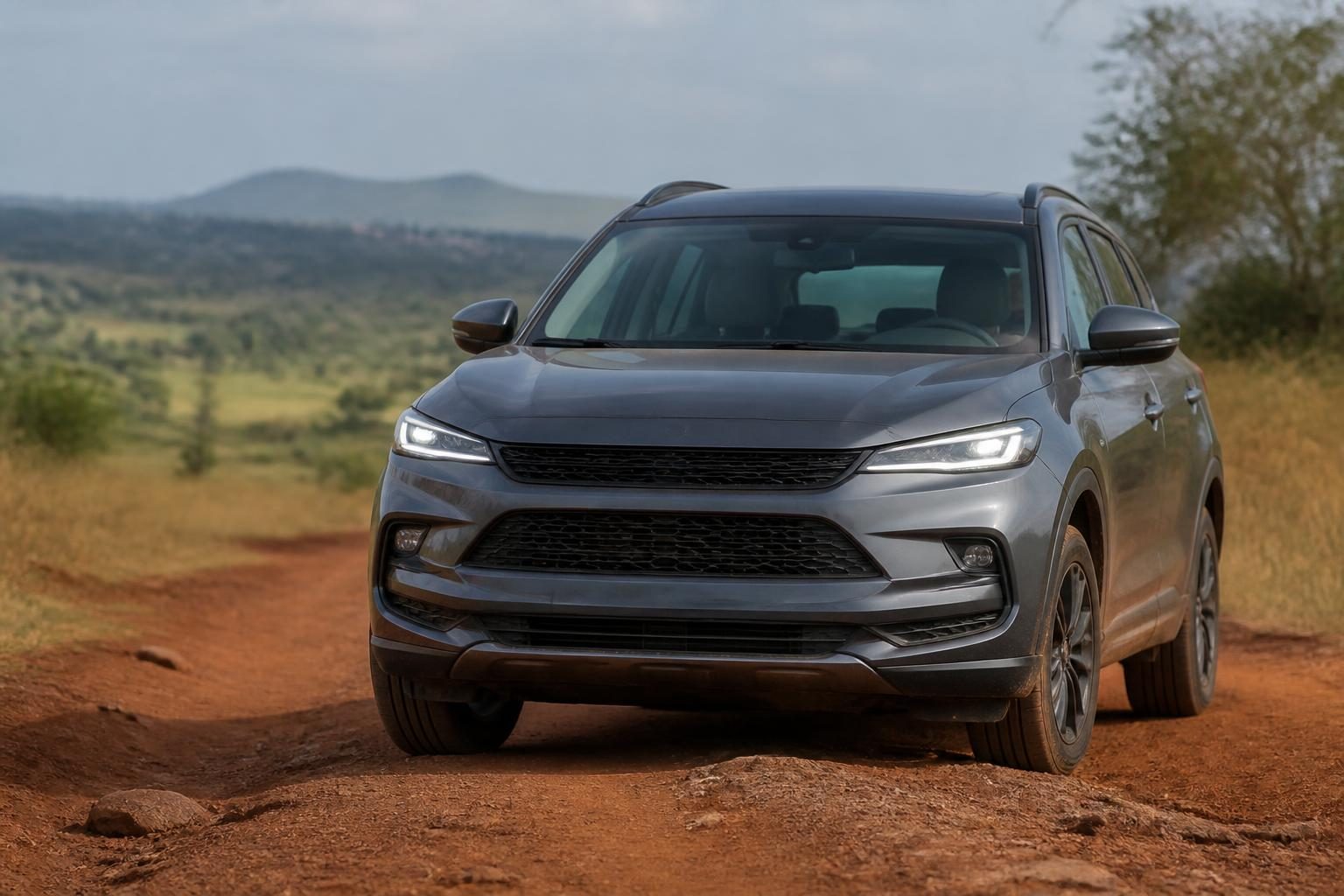 A gray SUV drives along a rough red dirt road in open countryside.
The practical rule is simple: buy an SUV because your regular routes justify it, not because every Zambian buyer needs one. Tyre sidewalls, suspension condition, driving speed and route knowledge can matter as much as the body shape.
Ground Clearance for Potholes and Gravel
More clearance helps on rough roads, but the published number only tells part of the story. Toyota’s official Aqua guidance lists 140 mm for a 2WD version and 155 mm for 4WD, measured with no passengers or luggage (Toyota Japan, “Aqua Minimum Ground Clearance Measurement”, current page).
Minimum ground clearance is the smallest distance between the road and the lowest fixed part underneath the vehicle. The figure can vary by model year, trim, drivetrain and load, while tyre choice may also affect the practical margin. Passengers, fuel and luggage can reduce that margin, especially when a car already sits low.
Minimum clearance is useful for comparing vehicles, but it does not prove that one is suitable for every gravel or rural road. Toyota lists the Aqua at 140 mm in 2WD form and 155 mm in 4WD form, with both measurements taken without passengers or luggage. That means the 15 mm difference is a useful specification change, not a promise of off-road performance. A loaded car sits differently, and tyres, suspension condition, wheelbase, speed and the shape of an obstacle also affect whether the underside clears it. The figures help you screen vehicles before purchase. They cannot replace checking the exact variant, inspection report and roads you use. For model-specific figures, compare the relevant Toyota specifications and confirm the model code before relying on a clearance number.
The following figures are selected manufacturer references. They are not an off-road ranking, and each applies only to the stated model or variant.
| Vehicle reference |
Drivetrain or variant |
Minimum clearance |
| Toyota Aqua |
2WD |
140 mm |
| Toyota Aqua |
4WD |
155 mm |
| Nissan Kicks, exact variant |
Confirm against an official specification |
Not stated |
Do not use the Nissan Kicks article as a formal technical specification. The current P15 Kicks examples shown for Zambia are 2WD, so verify clearance and drivetrain from the exact official variant document before comparing them with other vehicles.
A sedan can still handle normal paved roads and well-maintained inter-town highways. An SUV simply gives you more tolerance when the route includes broken edges, gravel and uneven access roads. Which type of road appears on your weekly route?
Which Costs Less to Run: an SUV or a Sedan?
A sedan or hatchback often costs less to run in urban use, but the exact model, engine, drivetrain and test cycle decide the result. Toyota’s official Aqua guidance lists 140 mm of clearance for 2WD and 155 mm for 4WD, showing that drivetrain can change the specification (Toyota Japan, “Aqua Minimum Ground Clearance Measurement”, current page).
Some SUVs weigh more or use wider tyres than comparable cars, but the difference depends on the model and trim. Larger engines, taller bodies and four-wheel-drive hardware can increase running costs in some comparisons. A small hybrid hatchback or sedan may make more sense for stop-start Lusaka traffic when fuel spending is a priority.
Fuel figures must be compared carefully. Japanese vehicles may use JC08 or WLTC testing, and those figures should never be mixed without clear labels. The figures shown on vehicle pages can also vary by model code, so confirm the exact specification rather than relying on a general model name.
Ownership costs go beyond fuel. Consider tyre replacement, suspension parts, steering components, brakes, service access and parts availability. Engine capacity also matters because customs assessment depends on factors including engine size and vehicle age. Check customs, registration and landed-cost responsibilities before making a budget. Landed cost means the vehicle and shipping expense plus applicable customs, registration and clearance charges, so the quoted vehicle price is not the final on-road total. The import rules and regulations explain the responsibilities to check.
For urban use, a fuel-efficient Toyota Aqua hybrid hatchback, practical Honda Fit hatchback or Nissan Note may be a better fit than a larger SUV. A Toyota Corolla sedan can also suit buyers who want a conventional boot and a familiar road-focused layout.
The questions buyers usually ask are revealing. They want to know whether the car will clear potholes, how much fuel it may use, whether replacement tyres are affordable and how much luggage it carries. Those questions point to the real decision: match the car to the route and the ownership budget.
Body Style Fit for Lusaka, Long Trips and Family Use
A sedan or hatchback may be easier around Lusaka, while an SUV can offer more flexibility when passengers, luggage and rougher routes are part of the plan. The exact model, tyres, condition and route still determine the outcome. The Road Development Agency currently lists Zambia’s national road network at 67,671 kilometres, but that figure describes network size, not road quality (Road Development Agency, official website, accessed 2026).
| Driving need |
Likely better fit |
Why |
| Mostly paved Lusaka roads |
Sedan or hatchback |
Easier parking; running costs depend on the exact model |
| Regular potholes and gravel |
Compact crossover |
More clearance without a large body |
| Long inter-town journeys |
Either body style |
Comfort, tyres and condition matter more |
| Large family or bulky luggage |
SUV, wagon or minivan |
More flexible cabin and cargo space |
| Lowest fuel spend |
Hybrid sedan or hatchback |
Suits frequent urban driving |
| Rural access roads |
SUV |
More clearance, but not a replacement for proper 4WD |
A sedan can feel stable and comfortable on paved inter-town roads. Its separate boot may also keep luggage secure and organised. A hatchback can be even more useful in town because the rear seats fold and the shorter body is easier to place in tight spaces.
A compact crossover sits between the two. It can provide a higher seating position and extra clearance without the size of a large SUV. The catch is that many are still road-focused, and their extra height does not automatically mean stronger off-road ability.
Large families should also consider people movers. A Nissan Serena, Toyota Noah or Toyota Esquire may provide seven or eight seats without choosing an SUV purely for family space.
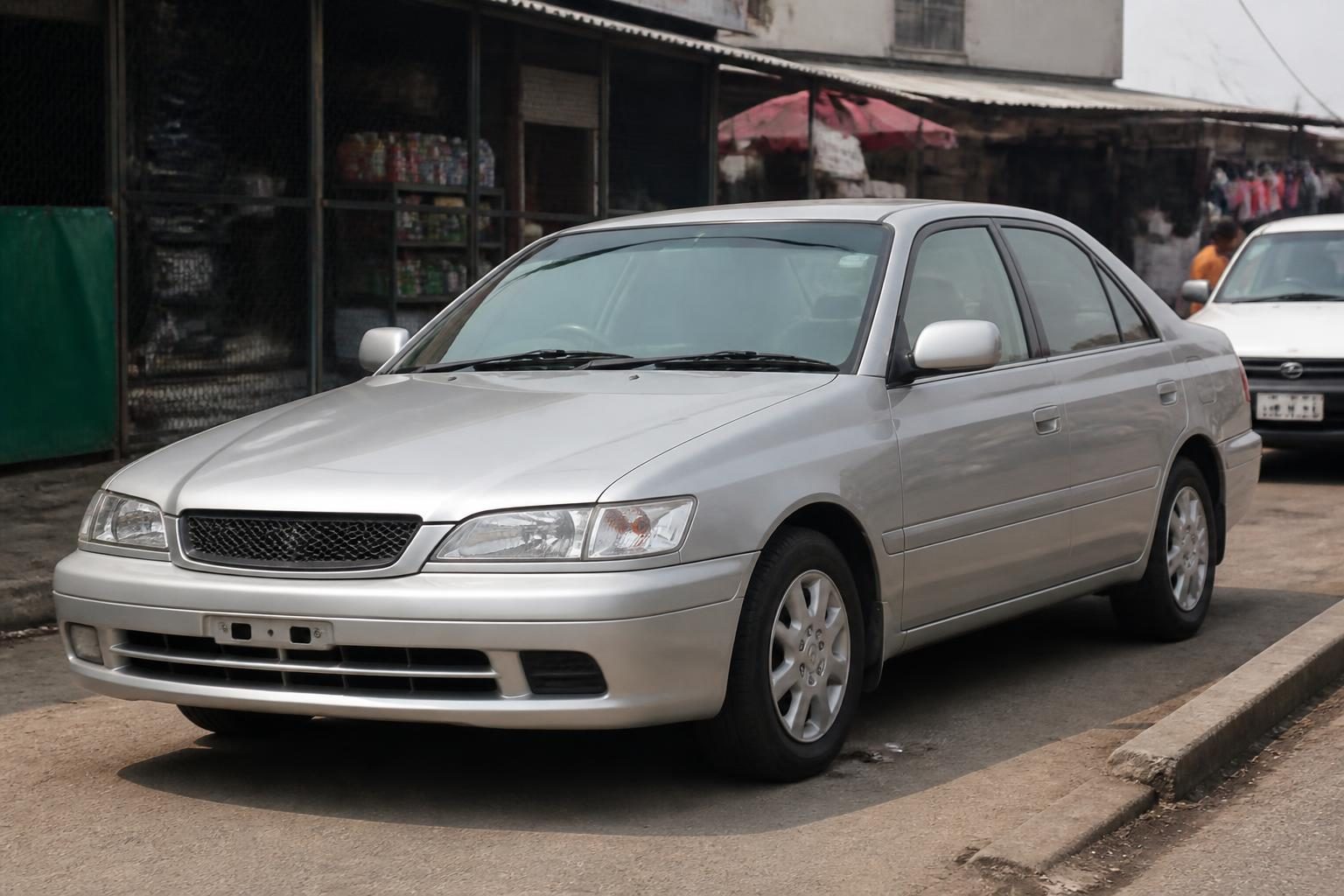 A silver sedan parked neatly beside small shops on a busy urban street.
A taller driving position can improve visibility, but it does not automatically improve safety or handling. If you mostly drive paved Lusaka roads, why pay for extra size that your route rarely uses?
What Should You Check Before Choosing Either Body Style?
Condition and exact specification matter more than the SUV or sedan badge. Toyota’s official Aqua page warns that its 140 mm and 155 mm measurements apply to an unloaded vehicle, because passengers, fuel and luggage change the practical clearance (Toyota Japan, “Aqua Minimum Ground Clearance Measurement”, current page).
Before choosing, check:
- The exact engine size in cc.
- Two-wheel drive or four-wheel drive.
- The official clearance figure for the exact variant.
- The auction grade and auction-sheet notes.
- The inspection report and any defect comments.
- The odometer reading and service history where available.
- Tyre size, sidewall profile and replacement cost.
- Underbody, suspension and steering condition.
- Hybrid battery condition where applicable.
- Parts and servicing support in Zambia.
- What the quoted vehicle price includes.
- Customs, registration and port-clearance responsibilities.
An auction sheet is a Japanese auction-house inspection record, not a government-issued vehicle record. It typically shows the auction grade, mileage, damage marks and condition notes, although formats vary. The grade should be quoted exactly as shown, because a grade 4 is not the same as a grade 4.5.
Carbarn’s published import guidance says Zambia has no import age limit. This commercial guidance should be checked against current Zambian customs requirements before purchase. Older vehicles still need careful judgement, because age may affect condition, parts, repair costs and resale. The vehicle price should also not be treated as the final landed or on-road total.
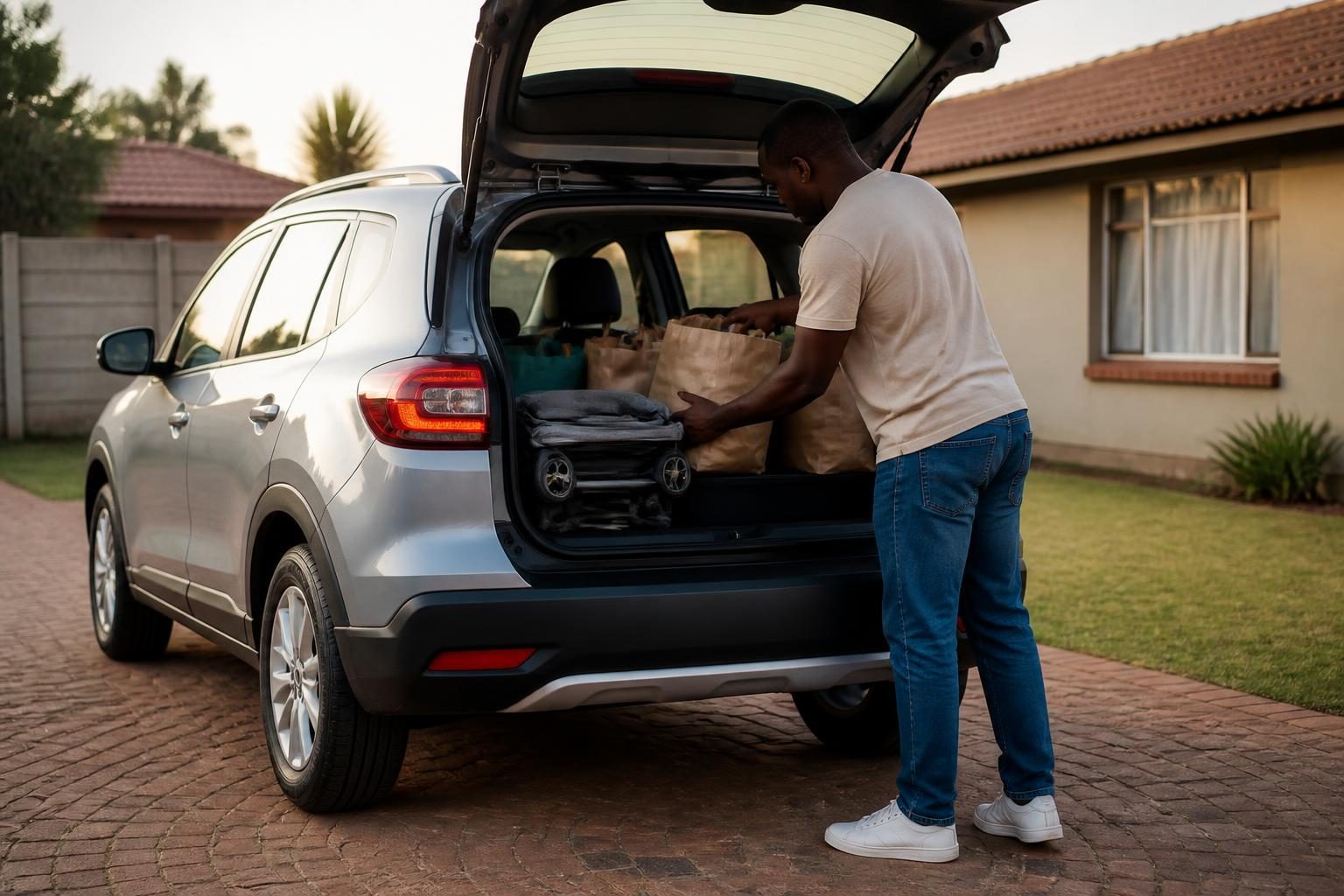 A man packs grocery bags and a folded stroller into a silver SUV in a suburban driveway.
A well-inspected sedan can be a better purchase than a poorly checked SUV. Start with the exact model code, drivetrain, reports and underbody condition. The badge comes later.
Which Should You Choose for Your Own Driving?
A sedan suits mostly paved Lusaka driving, while a compact crossover or larger SUV makes more sense as potholes, gravel, passengers and luggage become regular parts of the route. A Nissan Kicks comparison must use the exact model code, drivetrain and an official technical specification, because figures can differ between variants.
Choose a sedan if you mainly drive paved Lusaka roads, rarely use badly rutted routes, and prefer a conventional boot. A hatchback or hybrid may suit you if easy parking, flexible cargo space and urban driving matter most. Compare fuel and tyre costs for the exact variants before deciding.
Choose a compact crossover if potholes, gravel and uneven roads appear regularly, but you do not need a large cabin or serious four-wheel-drive ability. The Nissan Kicks and Toyota C-HR fit this road-focused middle ground, subject to the exact variant and condition.
Choose a larger SUV if rural travel, poor access roads, frequent drainage crossings or heavy luggage are normal parts of your driving. A Toyota RAV4 SUV can make more sense in that situation, particularly when the selected drivetrain matches the route.
Skip an SUV if you are paying for extra size and fuel use without a genuine road or space need. Skip a low sedan if your regular route includes deep ruts, rocky sections or severe drainage crossings.
How Does Carbarn Help You Compare Japan-Sourced Vehicles?
Carbarn lists Japanese vehicles for Zambian buyers. Each vehicle is shown with a Japanese auction-house inspection sheet and an in-house inspection report before payment, while JEVIC certification is completed before export.
The route is Japan to Dar es Salaam, followed by overland transport into Zambia. Carbarn’s terms state about 6 to 10 weeks from purchase confirmation to final delivery (Carbarn terms and conditions). Treat that as an estimate, not a fixed promise.
The listed vehicle price covers the vehicle, shipping and JEVIC inspection. It does not include customs duties, local registration fees or port-clearance charges. You can browse the vehicle categories, learn how the Japan-to-Zambia buying process works, and review the Zambia import rules before comparing options.
The short verdict
A sedan or hatchback may make more sense for mostly paved Lusaka driving and easy manoeuvring. A compact crossover suits mixed city, pothole and gravel use when its exact clearance and drivetrain fit the route. A larger SUV may earn its extra size when rough roads, rural travel, family space or heavy luggage are regular needs.
Ground clearance, drivetrain, tyres, suspension condition and driving habits matter more than the SUV badge alone. The right car for Zambian roads is the one that matches the roads you actually drive.