Fuel choice can quietly shape your motoring costs for years. For the best fuel type for Zambia, start with your driving pattern: hybrids suit heavy Lusaka traffic, diesel suits regular loads and long distances, while petrol suits simpler mixed use. In July 2026, the Energy Regulation Board’s July 2026 Pump Price Build-Up placed petrol around K26–K27 per litre and diesel around K28–K29 per litre.
But fuel price is only part of the decision. Lusaka traffic, long inter-town journeys, rough roads, passenger loads and servicing access all change which vehicle makes sense. The best powertrain for a daily commuter may be a poor choice for a small business.
Quick Answer
- Hybrid: Often a strong fit for frequent stop-start Lusaka traffic, if the vehicle’s battery evidence is satisfactory.
- Diesel: Often better for heavy loads, passenger work and regular long-distance travel.
- Petrol: A practical general-purpose choice for moderate mileage and simpler ownership.
- Official figures are only a starting point. Toyota Aqua examples from relevant earlier model periods record roughly 29.3–35.8 km/L WLTC, while a Honda Fit e:HEV LUXE FF example records 27.6 km/L WLTC.
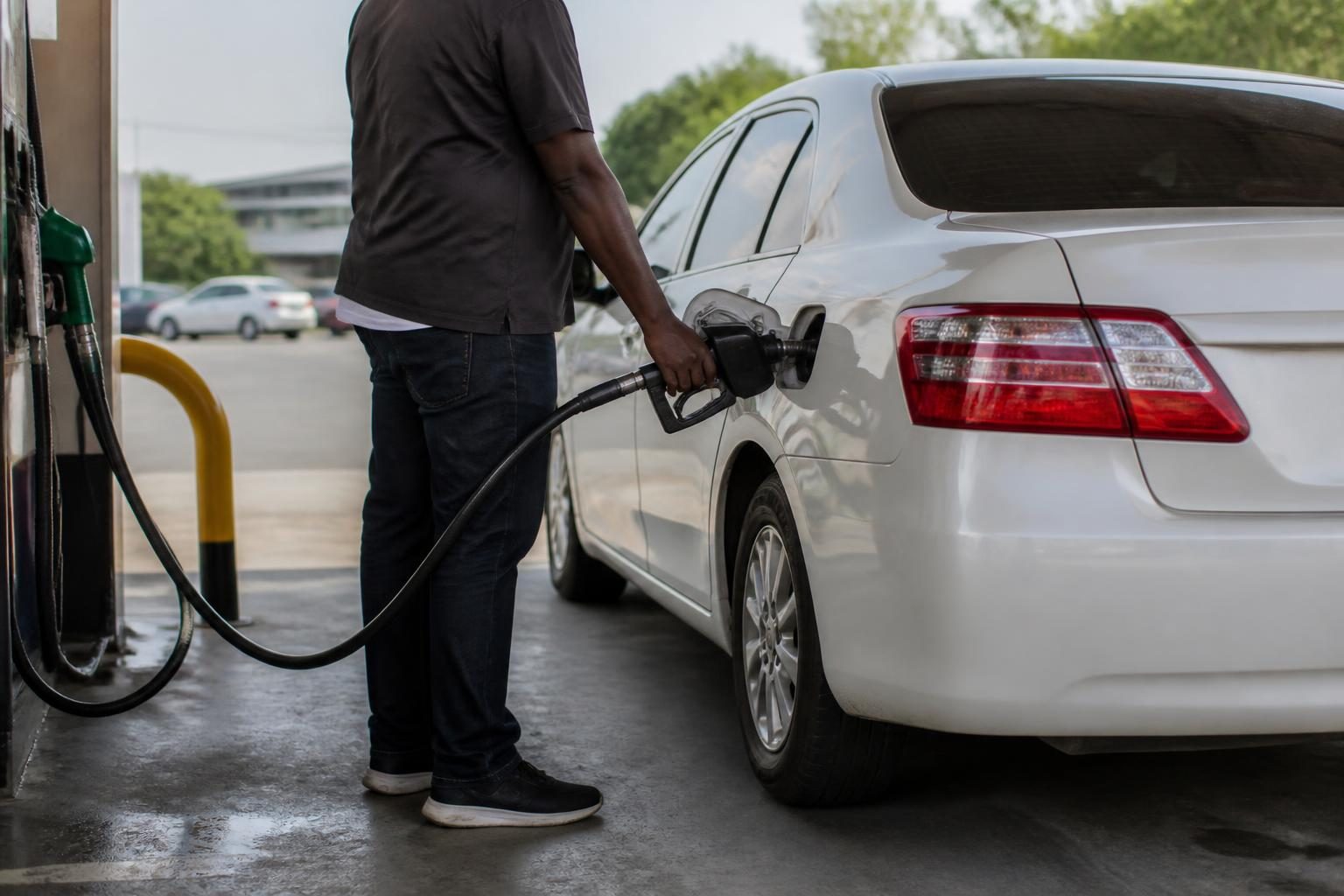
A person pumps fuel into a white sedan at a service station in daylight.
Compare Japanese vehicles available for Zambia
Which Powertrain Is Best for Different Zambian Drivers?
The best fuel type depends on how far you drive, what you carry and where you drive it. In July 2026, the Energy Regulation Board’s July 2026 Pump Price Build-Up listed petrol around K26–K27 per litre and diesel around K28–K29, showing why fuel prices need regular checking.
| Powertrain |
Strongest fit |
Main advantage |
Main trade-off |
| Petrol |
Mixed use and moderate mileage |
Broad choice and familiar ownership |
Larger engines can use more fuel |
| Diesel |
Loads, passengers and long distances |
Torque and strong cruising ability |
More complex systems and repairs |
| Hybrid |
Stop-start urban driving |
Efficient low-speed running |
Battery condition needs checking |
“Best” does not mean the lowest laboratory figure. It means the vehicle that gives you the right balance of fuel use, space, ground clearance, purchase cost and maintenance access.
According to the 2026 ERB fuel-price snapshot, petrol and diesel prices can sit surprisingly close together. That means diesel’s value comes from its lower consumption and useful torque, not automatically from cheaper fuel.
When Does a Petrol Vehicle Make Sense?
Petrol is usually the better starting point for moderate mileage, mixed driving and buyers who value simpler ownership. The official Honda Japan Fit Type Comparison lists 18.7 km/L WLTC for a specified petrol FF grade. That is a useful benchmark, not a promise of the same result on Zambian roads.
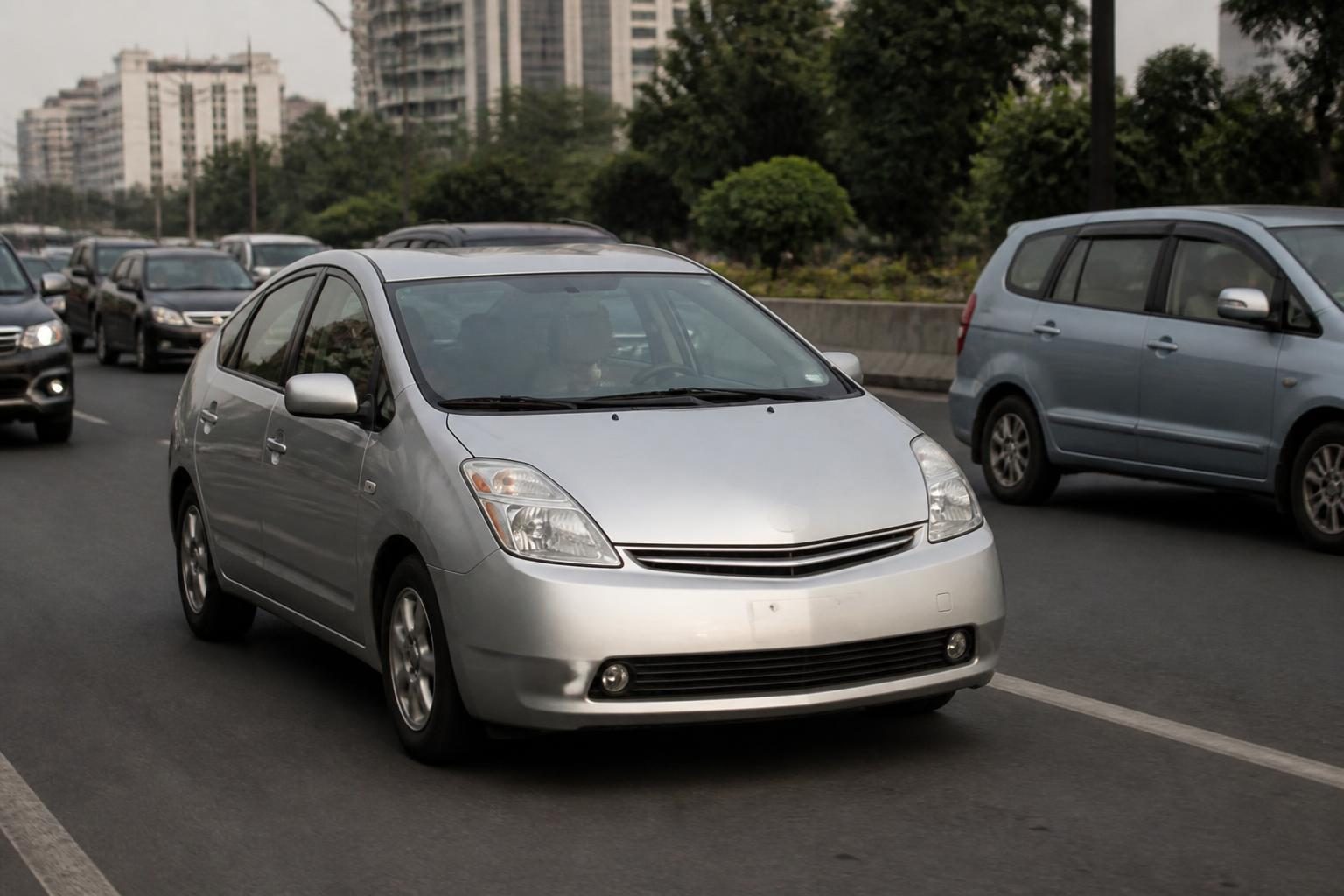
Silver hatchback moves through urban traffic with greenery and high-rise buildings in back.
Petrol suits shorter trips, occasional inter-town travel and drivers who want a wide choice of used Japanese vehicles. It can also make sense when your annual distance is moderate and you prefer a simpler drivetrain.
Small petrol hatchbacks and sedans may offer sensible running costs without the battery checks required by a hybrid. Examples include Honda Fit options for city driving, Toyota Corolla variants and smaller Nissan Note configurations. Always confirm the exact fuel type on the individual vehicle page.
Large petrol SUVs are a different story. If you mostly drive alone around Lusaka, paying to move unnecessary weight can make little sense. A smaller petrol car or hybrid may suit the same roads at a lower running cost.
What Should Petrol Buyers Check?
Check engine capacity, ground clearance, tyres, suspension condition and the model’s local parts support. The auction sheet is the Japanese auction inspection record for that vehicle. Read it with the in-house inspection report rather than relying on a clean-looking photograph.
A small petrol car can be more economical than a large hybrid SUV, as a general size-and-weight consideration rather than a universal result. Vehicle size can matter as much as the badge on the fuel flap, so compare official figures for the exact vehicles.
When Is Diesel the Better Choice?
Diesel is generally the better fit when a vehicle regularly carries people, cargo or equipment. In Toyota’s official 2026 HiAce Van Special Specification, the 2.8-litre diesel produces 300 Nm, compared with 243 Nm for the 2.7-litre petrol and 182 Nm for the 2.0-litre petrol.
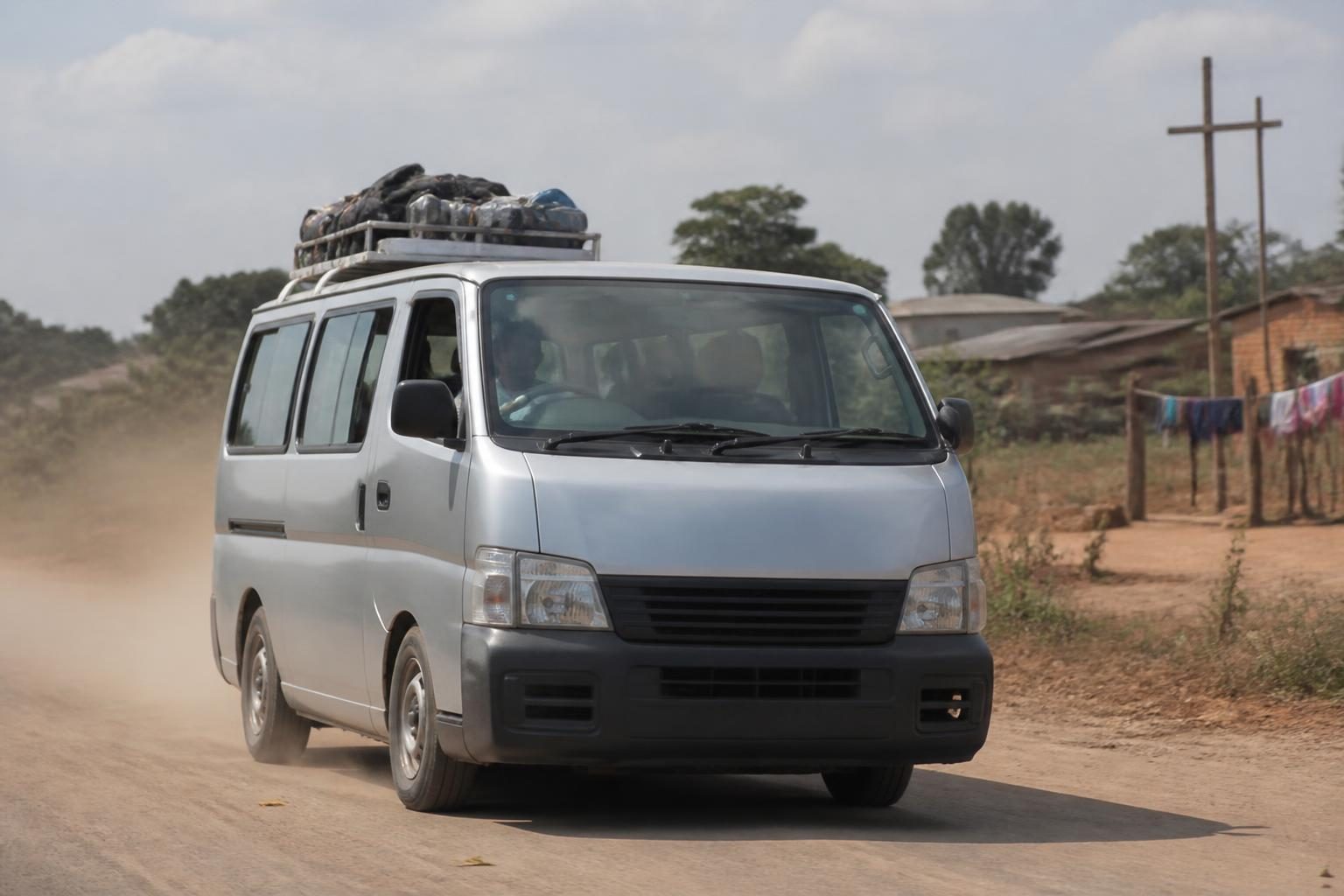
A silver passenger van travels a dusty rural road with bags strapped to the roof.
That extra low-speed pulling ability helps when a vehicle is loaded, climbing or working across long distances. Toyota’s official figures also list 12.4 km/L WLTC for a cited HiAce diesel example, compared with 9.3 km/L for a 2.0-litre petrol and 8.9 km/L for a 2.7-litre petrol variant.
Diesel is therefore worth considering for a people-mover, delivery business or regular inter-town work. Toyota HiAce vehicles for heavier loads include both diesel and petrol examples, so the model name alone does not identify the powertrain.
A diesel may not recover its higher purchase and repair costs for a low-mileage driver who mostly makes short urban trips. Fuel savings matter less when the vehicle carries little and travels few kilometres.
Who Should Avoid a Diesel?
Avoid choosing diesel for status rather than work. A large diesel van or SUV can cost more to own if it spends most of its life carrying one person through town.
According to Toyota’s 2026 HiAce specification document, the same model is offered with 2.8-litre diesel and 2.0 or 2.7-litre petrol engines. Exact variant, drivetrain and condition must be checked before comparing costs.
[CHART: Horizontal bar chart showing official WLTC figures: Honda Fit specified petrol FF grade 18.7 km/L, Honda Fit e:HEV LUXE FF 27.6 km/L, Toyota Aqua earlier model-period examples 29.3–35.8 km/L, Toyota HiAce cited diesel variant 12.4 km/L, and Toyota HiAce petrol variants 8.9–9.3 km/L. Sources: Honda Japan Fit Type Comparison, 2026; Toyota Japan Aqua Fuel Economy Information, 2026; Toyota Japan HiAce Van Special Specification, 2026.]
Are Hybrid Vehicles a Good Choice for Zambia?
Hybrids are often the strongest fit for Lusaka drivers because repeated braking and acceleration give the system more chances to save fuel. Toyota’s official Aqua fuel-economy information lists 29.3–35.8 km/L WLTC for a range of variants from relevant earlier model periods. Current entries should be checked separately for the model year you are considering.
A hybrid recovers some energy while slowing down. It stores that energy in the battery, then uses electric assistance when pulling away or moving at low speed. That pattern suits congested urban traffic better than long, steady highway running.
Honda’s 2026 Fit Type Comparison lists 27.6 km/L WLTC for an e:HEV LUXE FF example and 23.5 km/L for an e:HEV LUXE 4WD example. The 4.1 km/L difference shows why drivetrain, weight and tyres matter even within one model family.
You can compare a Toyota Aqua hybrid example, efficient Nissan Note options and other compact vehicles. A larger hybrid SUV, such as the Honda CR-V Hybrid option, may offer more space, but vehicle size and weight are practical reasons not to assume it will use fuel like a small hatchback. Check the exact variant’s official figures before comparing.
A hybrid suits frequent urban driving when the vehicle’s condition and battery evidence are satisfactory. The relevant WLTC figures show its potential, but laboratory testing doesn’t reproduce every Zambian route, traffic pattern or passenger load. Review the auction sheet, inspection report and model code vehicle by vehicle. Ask what battery testing or evidence is included, because the available documents may not provide one standard battery-health threshold.
As a practical buying check, review hybrid battery information vehicle by vehicle alongside the auction sheet, inspection report and model code. The available documents may not provide a single battery-health threshold, so ask what testing or evidence is included. Avoid blanket claims that every hybrid battery will fail soon, or that every battery will last indefinitely.
A practical buyer question is simple: will this vehicle spend enough time in city traffic to repay its extra complexity? If most journeys happen on open roads, the advantage may be smaller.
WLTC is a laboratory fuel-economy test combining city, suburban and highway conditions. Actual fuel use changes with traffic, air-conditioning, tyres, road quality, maintenance and passenger load.
What Matters More Than the Fuel Type?
Vehicle condition and suitability usually matter more than the fuel label alone. Honda’s 2026 official figures show a 4.1 km/L WLTC difference between the Fit e:HEV FF and 4WD examples, proving that drivetrain choice changes efficiency within one model.
Before comparing petrol, diesel and hybrid, check:
- Driving pattern: Mostly urban, highway, rural or mixed?
- Annual distance: Fuel savings matter more as kilometres increase.
- Vehicle size: A small petrol car may use less fuel than a large hybrid SUV.
- Engine capacity: This can affect parts of Zambia’s import-cost assessment, but it is not the sole basis for customs valuation.
- Condition: Check auction grade, accident history, odometer and inspection notes.
- Local support: Consider tyres, suspension, parts and diagnostic knowledge.
Road quality and ground clearance also matter. A low urban hatchback may be economical around Lusaka but less suitable for frequent rough-road travel. A larger vehicle may be justified for clearance or space, not simply appearance.
The Zambia Import Rules and Regulations page states that Zambia has no import age limit and permits only right-hand-drive vehicles. Confirm those points against current ZRA and RTSA guidance before purchase. No age limit does not necessarily mean no age-related surcharge or tax consequence, so check current official guidance. Older cars also need careful assessment of condition, parts and resale.
The Zambia Revenue Authority’s Importation of Goods guidance explains that import assessment uses customs values and related costs. Check current official guidance rather than relying on a fixed duty or tax percentage.
[CHART: Illustrative monthly fuel-volume chart using 1,500 km per month and official WLTC figures: Honda Fit specified petrol FF grade approximately 80 litres, Honda Fit e:HEV LUXE FF approximately 54 litres, Toyota HiAce diesel approximately 121 litres, and Toyota HiAce petrol approximately 161–169 litres depending on the variant. This is an illustration, not a real-world ownership forecast.]
How Should You Choose Before Importing?
Choose the powertrain that matches your most common journey, not the most attractive brochure figure. In 2026, Honda’s official Fit figures range from 18.7 km/L WLTC for a specified petrol FF grade to 27.6 km/L for an e:HEV LUXE FF example. Your traffic and vehicle condition will decide actual use.
| Driving situation |
Starting direction |
Main reason |
| Stop-start Lusaka traffic |
Hybrid |
Electric assistance suits repeated slowing |
| Long journeys with light family loads |
Efficient hybrid or petrol |
Comfort and fuel use matter |
| Regular cargo or passenger work |
Diesel |
Torque and carrying ability |
| Moderate mileage and lower budget |
Petrol |
Broad choice and straightforward ownership |
| Rough or unpaved routes |
Suitable petrol or diesel |
Clearance and condition come first |
| Mainly urban family use |
Efficient hybrid or petrol |
Avoid unnecessary size |
Do not choose a large petrol SUV, large diesel or poorly documented hybrid without a clear reason. Compare engine capacity, model code, auction grade, inspection evidence and estimated landed cost together.
How Carbarn Helps You Compare Vehicles for Zambia
A direct import decision is easier when the exact vehicle, documents and shipping process are visible before payment. Allow about six to 10 weeks from purchase confirmation to delivery. The estimate can change with vessel schedules, customs, port congestion and inland transport.
JEVIC certification is a pre-export inspection required for the import process described here. Carbarn Zambia’s import process lists pre-inspected vehicles sourced from Japan. Its buying process provides the official Japanese auction sheet and Carbarn inspection report before payment, followed by JEVIC certification before export.
Vehicles travel by RoRo to Dar es Salaam, with Durban as an alternative route, then continue overland into Zambia. The self-service dashboard provides invoices, inspection reports, certificates, bill of lading and vessel tracking.
Landed cost means the total cost of getting the vehicle to Zambia, including applicable local charges. The listed price covers the vehicle, shipping and JEVIC inspection. Customs duties, registration fees and port-clearance charges are separate. Confirm the treatment of these costs in the final quotation.
Review how the buying process works, compare Japanese vehicles for Zambia and check the Zambia import rules and regulations before committing.
The Practical Verdict
For many Lusaka commuters, a small hybrid can be a strong fuel-saving direction when traffic is heavy and the battery evidence is satisfactory. For commercial operators and drivers carrying loads over long distances, diesel can be more suitable, depending on route, maintenance access and purchase cost.
Petrol is often the most practical all-round option when purchase budget, moderate mileage and straightforward ownership matter most. Official 2026 figures support the efficiency potential of hybrids, but they do not remove the need to check size, condition, clearance and servicing access. Skip a hybrid if battery evidence is unclear, skip diesel if you rarely carry loads, and skip a large petrol vehicle if most trips are short urban journeys.
Check a vehicle’s engine and specification details